
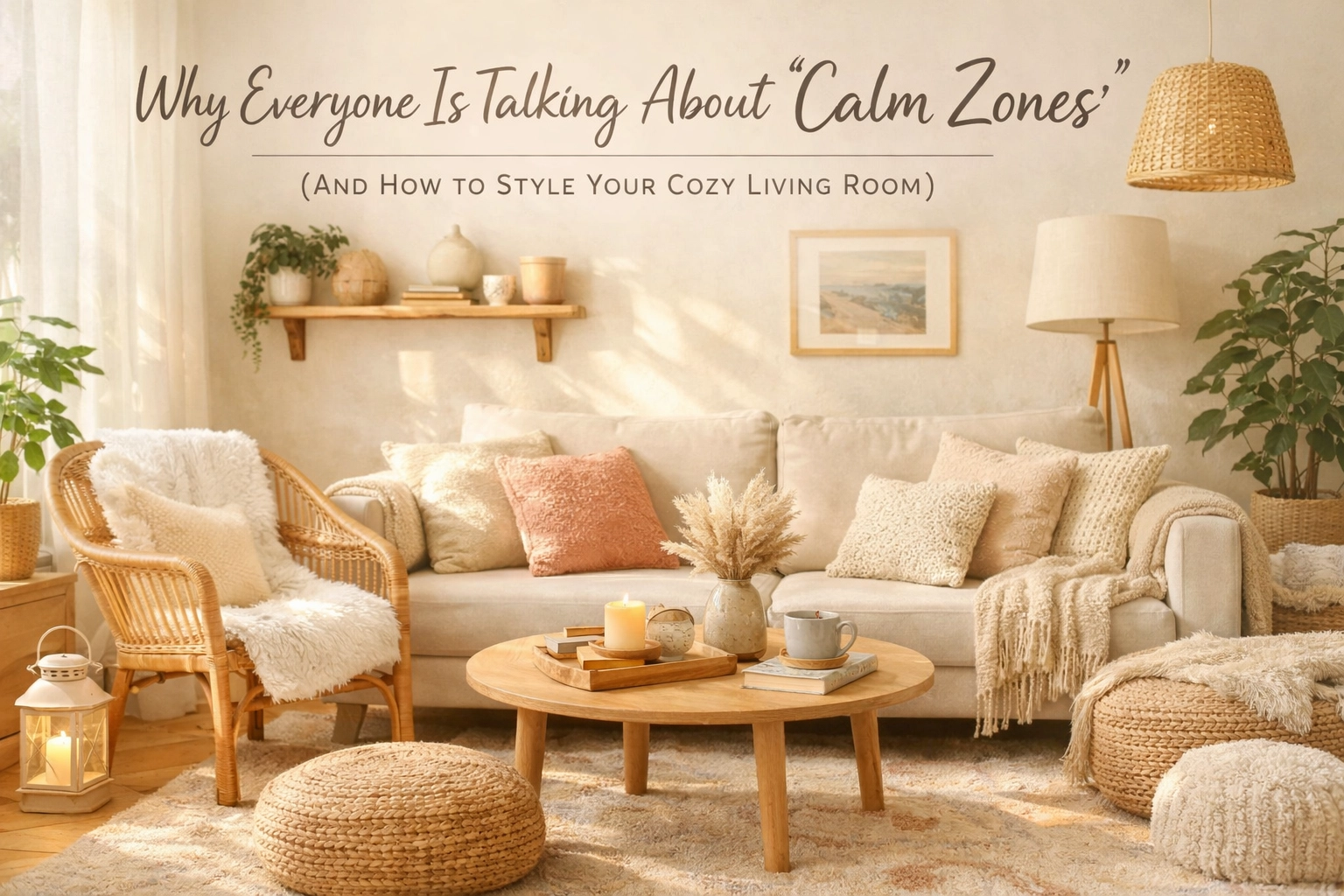
Have you ever walked through your front door after a long, frantic day, dropped your keys, and felt… even more stressed? I’ve been there. Sometimes our homes, which should be our sanctuaries, end up feeling like another item on our to-do list. Between the clutter, the mismatched furniture, and the bright overhead lights, it’s hard to actually relax.
Lately, there is a design movement taking the interior world by storm, and it’s something I am absolutely obsessed with: Calm Zones.
As an artist, I’ve always believed that our environment deeply influences our internal state. If your living room feels chaotic, your mind likely will too. But the beauty of a 'Calm Zone' is that it isn’t about spending thousands on a total renovation. It’s about intentionality. It’s about creating a dedicated pocket of peace within your home where you can truly decompress.
Today, I want to walk you through how to cultivate your own budget-friendly, cozy living room centered around this trend. Whether you’re a renter trying to make a white-walled box feel like home or a DIY enthusiast looking for your next project, these tips will help you elevate your space into a harmonious retreat.
What Exactly is a 'Calm Zone'?
In our modern, hyper-connected lives, our homes have had to become multi-functional hubs. They are our offices, our gyms, and our social spaces. A 'Calm Zone' is a deliberate design choice to reclaim a portion of that space for mental clarity and rest.
Research indicates that calming spaces can significantly decrease stress levels and improve focus. When we remove visual noise: like clutter and jarring colors: our brains can finally switch from "active mode" to "rest mode." It’s about creating a space that doesn’t demand anything from you.

Step 1: Mastering the Layout and Flow
Before you buy a single cushion, you have to look at how you move through your room. A room that feels cramped or awkward to walk through will never feel truly calm. Good spatial flow is the invisible foundation of a cozy living room.
Consider the natural sight lines in your space. When you sit on your sofa, what do you see? If you’re staring at a pile of shoes or a messy desk, your brain stays in "work" or "chore" mode. Try to orient your main seating area toward a window, a fireplace, or even a beautifully styled bookshelf.
One of my favorite ways to create a Calm Zone is to design a distinct "nook." This could be a reading corner with a single comfortable chair or a window seat with plenty of pillows. By creating these mini-zones, you invite yourself to pause.
Pro Tip for Renters: If you can’t move walls, use area rugs to define your zones. A plush rug under a reading chair instantly tells your brain, "This is a different space meant for resting."
Step 2: A Purposeful, Muted Color Palette
Color is perhaps the most powerful tool in an artist’s kit, and it’s just as vital in home decor. For a Calm Zone, we want to move away from high-contrast or neon shades and embrace muted, nature-inspired tones.
Think of colors that feel rooted in the earth:
- Sage Green: Brings the tranquility of nature indoors.
- Plaster Pink: Adds warmth without being sugary.
- Stone and Sand: Provide a neutral, grounding base.
- Ash and Chalk: Softer alternatives to stark white or harsh black.
While many people think "all-white" is the shortcut to a calm room, it can often feel clinical or cold. Instead, focus on tonal variations. Mix different shades of the same color to add depth. If you're curious about how specific colors affect your mood, check out our guide on color psychology for a productive and calm home.
Step 3: Layering Tactile Comfort
A cozy living room should be a multi-sensory experience. Once you have the colors right, it’s time to think about texture. This is where you turn a "house" into a "homescape."
Incorporate natural materials like wood, linen, and wool. These materials age beautifully and feel authentic. There’s something so grounding about resting your hand on a wooden side table or wrapping yourself in a heavy wool throw.
To keep this budget-friendly, look for high-quality textiles at thrift stores or during seasonal sales. You can often find stunning cozy Amazon finds like these chenille throw blankets that look and feel much more expensive than they are.

Step 4: Layered Lighting and Ambience
Lighting is the "make or break" element of any Calm Zone. Harsh, overhead "big lights" are the enemy of relaxation. Instead, you want to layer your lighting to create a soft, warm glow.
- Task Lighting: A small lamp by your reading nook.
- Accent Lighting: LED strips behind a TV or inside a bookshelf.
- Ambient Lighting: Dimmable floor lamps or even safe, flameless candles.
During the day, maximize your natural light. If you’re a renter and have those standard, uninspiring blinds, consider swapping them for sheer linen curtains. They diffuse the sunlight and create a dreamy, soft-focus effect in the room.
Step 5: Incorporating 'Cozy Green'
You can’t talk about calm without mentioning plants. Bringing the outside in is a proven way to lower heart rates and improve air quality. However, if you're like me and sometimes forget to water your green friends, don't worry! You don't need a greenhouse to achieve the look.
Opt for low-maintenance plants like Snake Plants, Pothos, or ZZ Plants. They thrive on neglect and still provide that hit of organic beauty. If you’re working with a small apartment, we have some great tips on how to decorate a small living room with plants.

The DIY Corner: Budget Home Decor Ideas
One of the reasons 'Calm Zones' are so popular is that they encourage us to step away from "fast furniture" and toward pieces with character. This is where DIY and upcycling come in.
Instead of buying a new coffee table, why not find a second-hand one and give it a makeover? A simple sanding and a coat of matte, earth-toned paint can completely transform a piece of furniture. It’s not just about the final product; the act of creating something with your hands is a form of meditation in itself. If you're new to this, my beginner’s guide to upcycling will walk you through it step-by-step.
"A home is not just a place where you live; it is a reflection of your soul. By creating a Calm Zone, you are giving yourself permission to rest and rejuvenate."
Practical Tips for Renters
I know how frustrating it can be to want a cozy living room when you aren't allowed to paint the walls or change the flooring. Here are a few renter-friendly hacks to build your Calm Zone:
- Peel-and-Stick Magic: Use removable wallpaper in a soft, textured pattern to create a feature wall in your nook.
- Command Everything: Use heavy-duty Command hooks to hang large-scale, calming art without damaging the plaster.
- The Rug Layering Trick: If your rental carpet is a bit "corporate grey," layer a large, neutral jute rug over it, then add a smaller, softer rug on top for extra comfort.
- Furniture as Art: When you can't change the architecture, let your furniture do the talking. A beautiful, thrifted armchair can be the focal point of your entire room.

Leaving Intentional Gaps
Finally, remember the importance of "white space": and I don’t mean white paint. Avoid the temptation to fill every corner and every wall. Leaving intentional gaps allows the eye to rest. It gives the room a sense of breathability and prevents that "cluttered" feeling that triggers stress.
Choose fewer, better pieces. One well-made, comfortable sofa is worth more than five small, uncomfortable chairs. One beautiful piece of art you truly love is better than a gallery wall of items you just bought to fill space.
Creating Your Sanctuary
Building a Calm Zone is a journey, not a destination. It starts with a single corner: a chair, a lamp, a soft blanket: and grows as you learn what truly makes you feel at peace.
By focusing on flow, nature-inspired colors, and tactile textures, you can transform even the smallest apartment into a cozy living room that feels like a warm hug. It doesn’t require a massive budget; it just requires a little bit of heart and a lot of intention.

Are you ready to carve out your own pocket of peace? I'd love to see how you're styling your spaces! Whether it's a tiny balcony or a sprawling lounge, we all deserve a place to breathe.
Warmly, Maria.
P.S. For more budget-friendly ideas and cozy vibes, come hang out with us on our Charming Homescape Pinterest boards!
Leave a Reply