
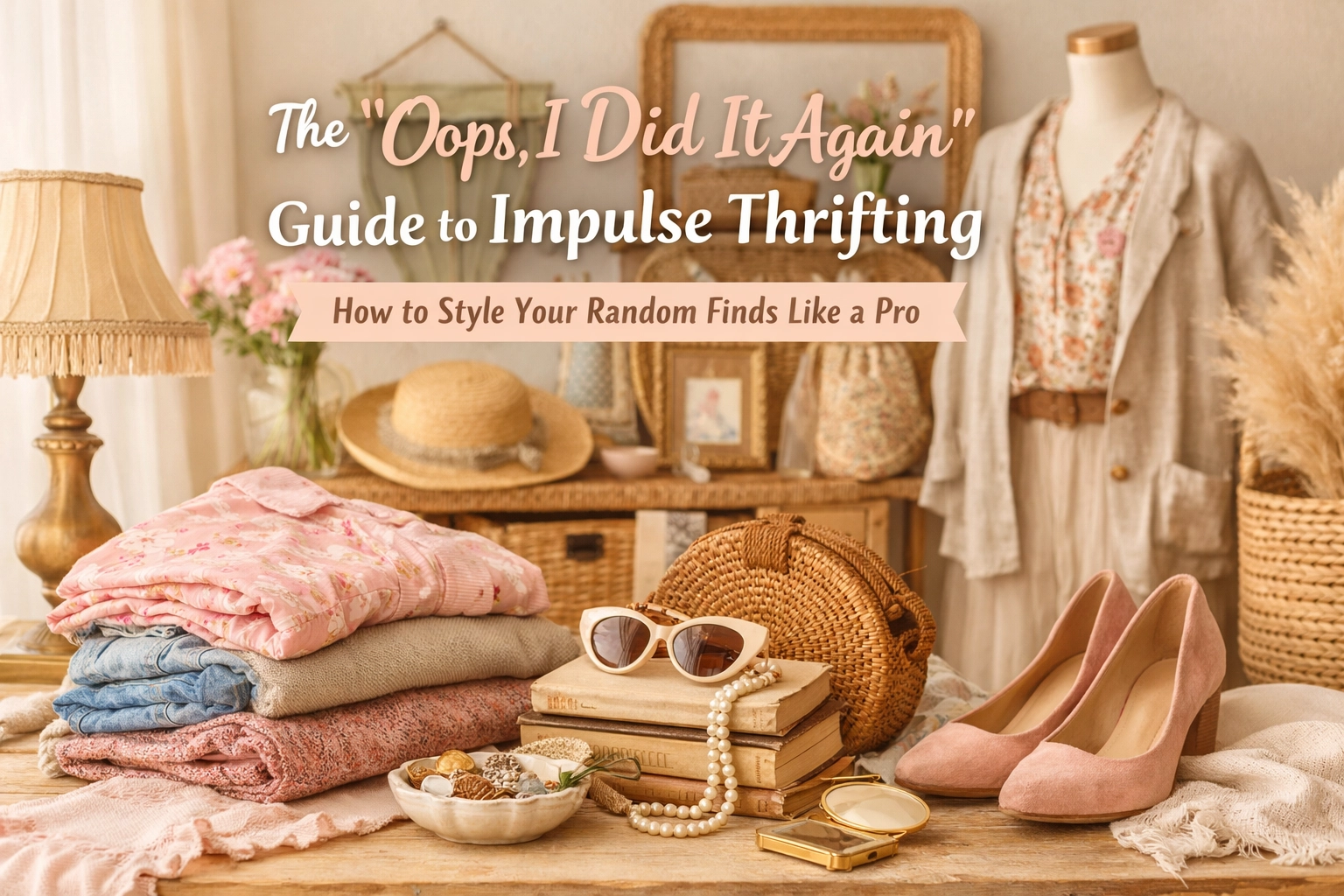
You know the drill: You popped into the charity shop for one specific thing, maybe a vase or some storage baskets, and somehow left with a brass pineapple candleholder, a velvet footstool in questionable condition, and a painting of what might be a horse (or possibly a very muscular dog). No judgment here. We've all been seduced by the £3.50 price tag and the thrill of "someone's going to snag this if I don't!"
But then you get home, and reality hits. That brass pineapple doesn't exactly vibe with your Scandi-minimal aesthetic, and the velvet footstool is giving "Victorian haunted mansion" when your flat is more "IKEA meets Pinterest." Before you shove everything into the back of a cupboard or stage an awkward re-donation, let me share how to make those random impulse finds look like you hired an interior designer who shops exclusively at high-end vintage boutiques.
This post contains affiliate links, which means I may receive a small commission at no cost to you if you make a purchase.
The Golden Rule: One Statement Piece Per Vignette
The biggest mistake people make with thrift finds is clustering all their quirky pieces together in one spot, creating what I call "car boot sale corner." Instead, treat each unique find as a statement piece that needs to be anchored by modern, simple basics.
Let's say you impulse-bought that ornate gold mirror. Rather than surrounding it with equally ornate candlesticks and vintage frames, place it against a clean, neutral wall and style it with sleek, contemporary elements, maybe a simple ceramic vase with fresh eucalyptus, or a modern table lamp. The contrast makes the vintage piece feel intentional and curated rather than "I raided my nan's attic."

This approach works for furniture too. That mid-century sideboard you couldn't resist? Style it with minimal decor: a single large plant, a small stack of coffee table books, and perhaps one simple bowl or tray. The restraint around the piece makes it the hero, not the hot mess.
The Art of the Edit: When Thrift Finds Need Friends
Sometimes a random thrift find just needs the right companion pieces to make sense in your space. Consider the "rule of threes" for styling: group items in odd numbers, varying heights, and complementary (not identical) styles.
That brass pineapple candleholder? Pair it with two other metallic or tropical-themed items in different finishes, maybe a matte black planter and a copper tray. Suddenly, it's not a random impulse buy; it's part of a considered metallic accent theme. The key is creating a visual conversation between pieces rather than letting each item shout for attention independently.
For larger furniture pieces like chairs or small tables, you can "edit" them by changing hardware, adding cushions, or styling them with textiles that bridge the gap between vintage and modern. A dated wooden chair becomes charming with a contemporary cushion in a bold geometric print. A scratched-up coffee table transforms when topped with a stylish tray that conceals imperfections while adding function.
The Spray Paint Solution (Yes, Really)
I know spray paint feels like the "easy answer" everyone suggests, but hear me out: it genuinely solves about 70% of thrift styling dilemmas. That orange-oak picture frame from 1987? Matte black spray paint. The garish gold lamp base that's the wrong shade of gold? Matte white or brass spray paint. The wicker basket that's a bit too grandma-cottage? A coat of sage green paint.
The beauty of spray paint is it creates visual cohesion across mismatched pieces. If you paint three completely different thrifted items the same colour, they suddenly look like an intentional collection rather than random bargains. For budget home decor ideas, a few cans of spray paint (around £5-8 each) can unify an entire room's accent pieces.

Pro tip: Stick to a small palette of 2-3 paint colours across all your upcycling furniture ideas. This creates consistency even when working with wildly different styles and eras. Matte black, soft white, and one accent colour (like sage green or dusty blue) can transform a chaotic collection into a cohesive look.
Strategic Placement: Location, Location, Location
Where you place a thrift find matters just as much as how you style it. Some pieces work better in certain rooms or specific spots, and understanding this can save you from design regret.
Entryways and hallways are perfect for statement pieces that might feel overwhelming in larger spaces. That ornate console table or dramatic mirror? Brilliant in an entryway where it creates impact but doesn't dominate. These transitional spaces can handle bolder, quirkier pieces because you're not living with them constantly.
Living room focal points should be reserved for thrift finds that either blend seamlessly with your existing style or elevate it. Think quality over quirk here: a beautiful vintage leather chair, a unique coffee table, or an oversized piece of art. These spaces benefit from pieces that look expensive and intentional.
Bedrooms and private spaces are your playground for more personal, experimental thrift finds. That vintage vanity table? Perfect in a bedroom where it doesn't need to coordinate with the rest of your home's aesthetic. The slightly odd lamp? Lovely on a bedside table where it adds character without overwhelming guests.
Kitchens and dining areas love functional vintage finds: enamelware, cutting boards, vintage glassware, wooden utensils. These items add warmth and character while actually being useful, making them easy to incorporate without dedicated styling.
The Intentional Imperfection Philosophy
Here's something liberating: Not every thrift find needs to be pristine or perfectly styled. Sometimes the chips, scratches, and patina are what make a piece special. The key is making those imperfections look intentional rather than neglected.
Display items with visible wear in ways that suggest you chose them specifically for their vintage character. A chippy painted stool looks charming holding a stack of books or a potted plant: it suggests "collected over time" rather than "couldn't afford better." A worn leather chair paired with a soft throw blanket looks intentionally vintage, not accidentally shabby.

This philosophy extends to mixing conditions and styles. A gleaming, newly painted side table can sit happily next to a chair with original vintage upholstery because the contrast feels curated. It's when everything looks equally worn or equally new that things feel off. The mix is what creates that "collected over time" aesthetic that interior designers charge thousands to achieve.
Creating Cohesion Through Colour and Texture
When you've got a room full of random thrift finds, colour and texture become your secret weapons for creating cohesion. Choose a unified colour palette (3-4 colours maximum) and ensure every thrifted item either matches that palette or gets adapted to fit.
This might mean recovering chair cushions, painting furniture, or adding textile accents like throws and pillows in your chosen colours. For example, if your palette is cream, terracotta, and sage green, that random wooden bench gets draped with a cream throw, the mismatched chairs get cushions in terracotta, and your various planters get painted in sage.
Texture also helps unite disparate pieces. Mix wood tones with similar undertones (all warm or all cool), combine metals that share a finish (all brushed or all shiny), and balance rough textures with smooth ones. A chunky knit throw can make a sleek vintage chair feel cozy. A smooth ceramic vase can calm down a rough wooden shelf.
The Styling Tray Technique
Want to know the easiest way to make any random collection of thrift finds look intentional? Put them on a tray. Seriously. A simple tray (you can even find these secondhand) instantly creates boundaries and suggests curation.
That collection of mismatched vintage bottles? Arrange them on a rectangular tray. Those random candlesticks you bought one-by-one? Group them on a round tray. The brass pineapple, a small plant, and some matches? Tray life. This works on coffee tables, sideboards, bathroom counters, and bedside tables.
The tray provides visual containment, making any grouping feel like a deliberate vignette rather than clutter. It's especially useful when your thrift finds are different styles, colours, or heights: the tray unifies them through shared space. Plus, it makes cleaning around them infinitely easier, which is never a bad thing.
When to Walk Away (And When to Rescue)
Not every impulse buy needs saving, and knowing when to cut your losses is part of becoming a skilled thrifter. If you've tried multiple styling approaches and a piece still doesn't work, it's okay to re-donate. Consider it practice for developing your eye: you're refining your taste with every decision.
However, before giving up, ask yourself these questions: Could this work in a different room? Would it function better repurposed (bookshelf as a plant stand, dresser as a TV console)? Is there a simple fix (new hardware, a paint job, different cushions) that would transform it? Sometimes a piece needs time to find its purpose in your home.
The beautiful thing about thrifting is that low-risk pricing allows for experimentation. That £8 chair doesn't need to be perfect immediately. Live with it for a week, move it around, try different styling approaches. You might discover its perfect spot when you least expect it.
Making impulse thrift finds work isn't about having perfect taste or a big budget: it's about understanding basic design principles and being willing to experiment. The pieces that feel "wrong" today might become your favourite elements tomorrow with just a slight shift in placement or styling. And honestly? A home full of carefully styled thrift finds has infinitely more personality than a showroom full of matching furniture sets.
So go ahead, buy the brass pineapple. Just remember: anchor it with modern pieces, give it breathing room, and for the love of good design, put it on a tray.
Warmly,
Maria
P.S. For more budget-friendly ideas, upcycling inspiration, and cozy vibes, come hang out with us on our Charming Homescape Pinterest boards! I'm always pinning new ways to make thrift finds look like treasure.
Leave a Reply