
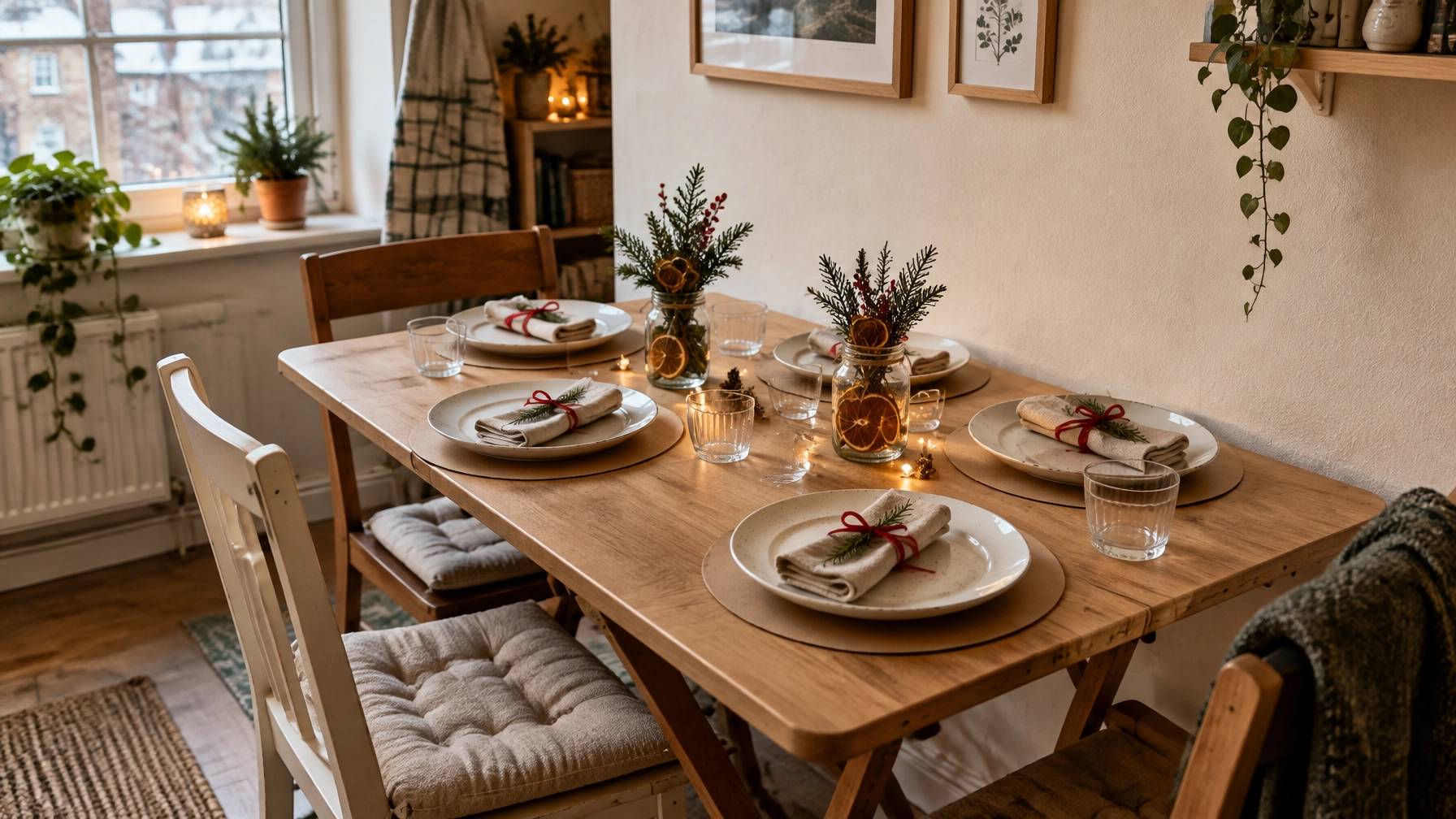
The Christmas table can be the heart of the celebration, even if it’s a small folding table squeezed into a corner. I love how a few familiar plates, a little greenery and soft light can make an ordinary meal feel special, without buying matching china or filling every spare inch with decorations.
These Christmas table decor ideas build a festive setting in practical layers, starting with what you own. The example shopping plan comes to £17.50, leaving room under £30 for price changes or a small extra find. Prices are estimates and can vary; the plan assumes you already have everyday plates, glasses and a few jars.
Start with the table you have
1. Measure, clear and choose your layout. A small table works best when decorations don’t compete with dinner. If yours is pushed against a wall, keep the centrepiece in a slim line rather than trying to style all four sides. On a folding table, check that the cloth won’t catch in the hinges or legs.
2. Pick two or three colours. Cream, evergreen and a little red feel classic; white, brown paper and greenery look calmer. Repeating a small palette across your napkins, paper details and centrepiece helps an assortment of everyday items feel like a considered Christmas table setting.
3. Add a simple base. Use a cloth or runner you already own, or look for a plain second-hand cloth for around £4. It softens the table and creates a clear base for the rest of the layers. If your table is against a wall, a runner down the centre can be easier to fit than a full tablecloth.

Build the setting with everyday pieces
4. Make quick paper placemats. Cut large circles or rectangles from leftover kraft paper or plain wrapping paper. This gives each place setting its own neat space without adding bulky chargers that might crowd a compact table. Keep paper away from open flames and hot dishes.
5. Make mismatched plates look intentional. Set different everyday plates over the same paper placemats, then repeat one detail (such as a red ribbon, a sprig of greenery or a simple colour) to connect the settings. A consistent background often does more than a matching plate set would.
6. Fold napkins simply. Use cloth napkins you already have, or look for a small charity-shop bundle for around £4. If you don’t own napkins, clean tea towels can work too. Tie each with ribbon from your wrapping stash, or tuck a small paper name tag beneath the fold.
7. Use the glasses already in the cupboard. Clear tumblers, wine glasses and even a mix of styles can sit comfortably together. Group them consistently, water glass in the same place at each setting, and keep spares off the table until needed.
Here’s the sample budget, with a running total for one small table:
| Layer | Budget-friendly choice | Added cost | Running total |
|---|---|---|---|
| Base | Second-hand cloth or runner | £4.00 | £4.00 |
| Placemats | Paper cut from supplies at home | £0 | £4.00 |
| Plates | Everyday plates | £0 | £4.00 |
| Napkins | Charity-shop bundle | £4.00 | £8.00 |
| Glassware | Glasses from your cupboard | £0 | £8.00 |
| Centrepiece | Supermarket greenery | £2.50 | £10.50 |
| Centrepiece | Oranges for homemade dried slices | £1.50 | £12.00 |
| Finishing | Ribbon or twine | £1.00 | £13.00 |
| Lighting | Small battery-light string | £1.50 | £14.50 |
| Base for display | Small charity-shop tray | £3.00 | £17.50 |
These are planning estimates, not guaranteed shop prices. The cost stays low because the tableware is already in use at home; if you need to buy plates or glasses too, look for just the missing pieces second-hand and keep an eye on the total.
Make a centrepiece that leaves room for dinner
8. Keep it low and narrow. As a useful rule of thumb, aim for a centrepiece around 15–20cm high or lower, and no wider than about a third of the table. That helps everyone see one another and leaves space for serving bowls. A shallow tray or board makes the whole arrangement easy to lift away when the food arrives.
9. Make a little greenery-and-orange runner. A few supermarket evergreen sprigs, dried orange slices, cinnamon sticks and pinecones can make a charming arrangement without florist flowers. You can dry thin orange slices in a low oven, turning them occasionally and checking until they’re dry; allow them to cool before adding them to the table. Keep foliage and paper away from heat, and avoid picking greenery unless you have permission.

10. Choose a centrepiece that fits your household. For a very narrow table, try two jars of greenery with an orange slice or ribbon tied around each. If you have room for a tray, gather greenery, a few pinecones and battery lights together so everything moves in one go. A shallow bowl with dried oranges and paper stars is another simple option, especially when children or serving dishes need most of the space.
11. Add a gentle glow, safely. A small battery-light string tucked around jars or greenery can bring warmth without a flame. For a reusable alternative, compare battery-operated warm-white fairy lights on Amazon UK; prices and availability may change, so this is an optional swap rather than part of the £17.50 plan.
I prefer battery lights around greenery, napkins and paper. If you choose real candles, use stable holders, keep flames well away from anything flammable, and never leave them unattended. With children at the table, battery lights are often the simpler choice. You can also compare battery-operated LED tea lights as an alternative.
Leave space for people, plates and hot food
12. Keep the practical details in the design. If children are joining you, avoid loose decorations they might pull or put in their mouths. Leave a clear landing spot for hot serving dishes, and move the centrepiece aside before food comes to the table. A small tray makes that quick, while protecting the table from damp greenery or drips.
For a compact table, the simplest layout is a single line of low greenery down the centre with a place setting either side of it, and a clear strip left free at one end for the serving dishes.
A simple small-table layout, from above:

  [plate] [glass]  ||  low greenery  ||  [plate] [glass]
        ----  clear strip for serving dishes  ----
If there’s no space for a traditional centrepiece, that’s absolutely fine. Two small jars at opposite ends, or one little cluster in the middle, can still make the meal feel festive.
The small details matter, but they don’t need to match perfectly. A repeated colour, a simple napkin tie and a low natural arrangement can bring the whole table together. For more ideas elsewhere in the home, see our Christmas living room decor guide. And if you’re curious about a more thrift-led, outdoor approach, our summer garden-party tablescape explores a different kind of gathering.
When Christmas is over, the tray, ribbon, paper decorations and battery lights can all go into one labelled box. Fold the cloth and napkins separately, and your seasonal table setting will be ready to bring out again next year, without taking over a cupboard.
A welcoming Christmas table doesn’t depend on a dining room, a matching set or a big spend. Start with what you have, make room for the food and conversation, and add just a few details that feel like you. Even the smallest table can hold a generous amount of Christmas warmth.
Warmly, Maria.
P.S. For more budget-friendly ideas and cosy vibes, come hang out with us on our Charming Homescape Pinterest boards!
Leave a Reply