
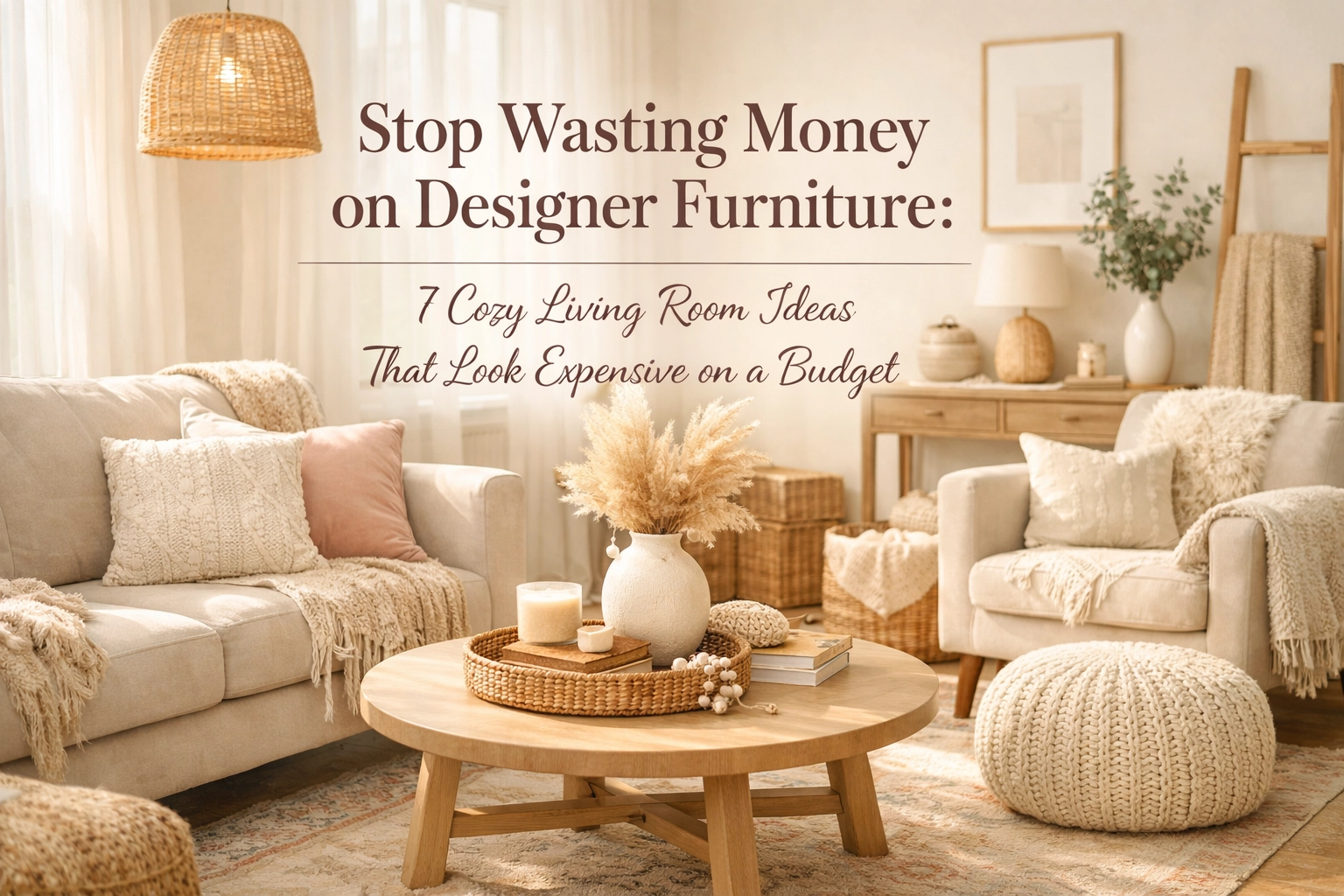
Let's be honest: designer furniture prices are absolutely wild. I'm talking £2,000 for a sofa that looks suspiciously similar to one I saw at IKEA for £400. Here's the thing: you don't need to drain your savings account to create a living room that looks like it belongs in a design magazine. With a few clever choices and strategic styling, you can absolutely master how to decorate on a budget while achieving that high-end, pulled-together look.
I've spent years perfecting the art of making budget-friendly spaces look expensive, and today I'm sharing my seven favourite tricks that'll transform your living room without requiring a second mortgage.
This post contains affiliate links, which means I may receive a small commission at no cost to you if you make a purchase.
1. Master the Art of Layered Lighting
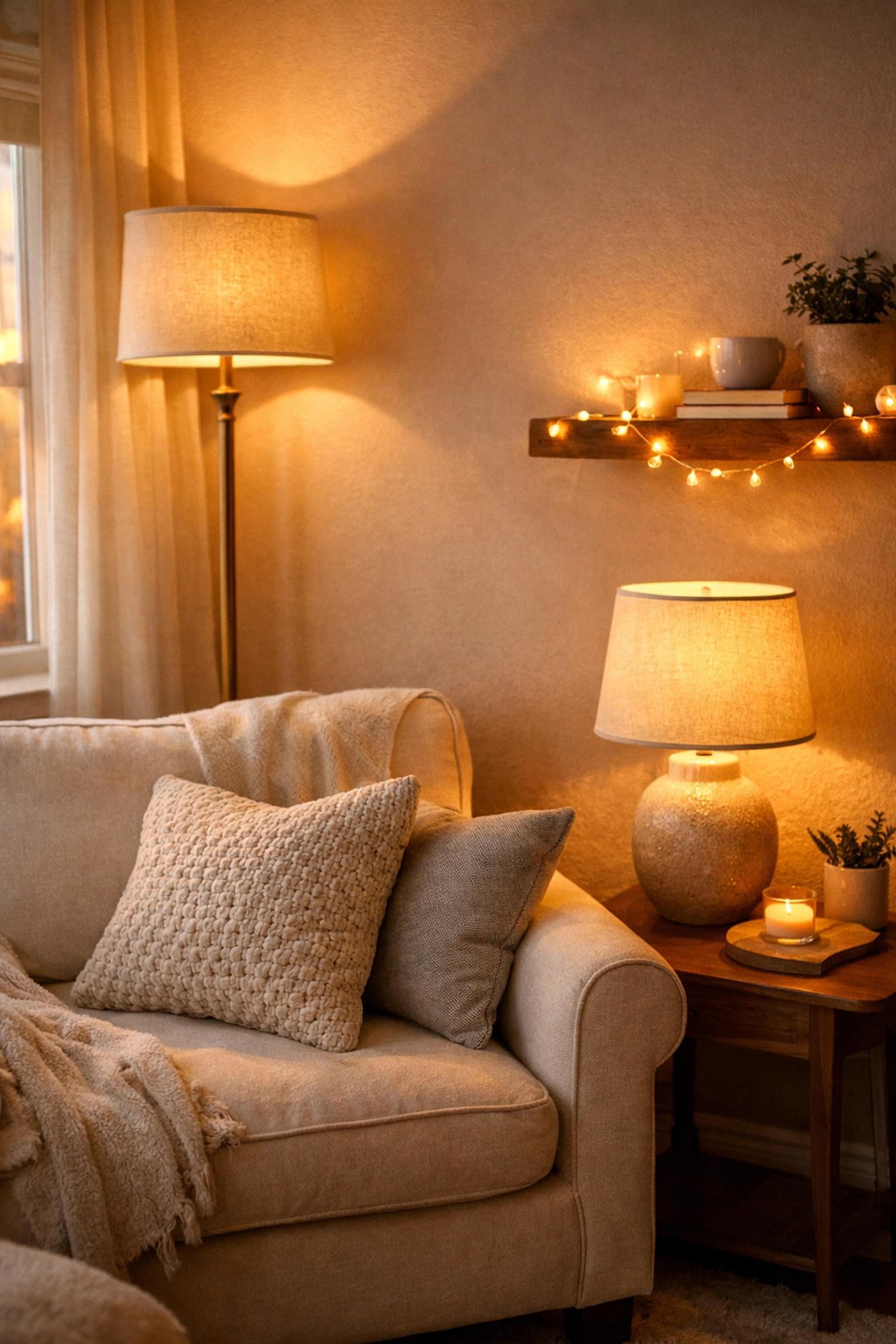
You know what makes a room instantly look cheap? That single overhead ceiling light doing all the heavy lifting. Lighting is genuinely one of the fastest ways to elevate your space, and the secret isn't buying one expensive fixture: it's layering multiple affordable light sources.
Consider adding a combination of floor lamps, table lamps, and even some affordable string lights to create depth and ambiance. I love placing a sculptural floor lamp in a corner (you can find stunning options under £50), a table lamp on a side table, and using dimmer switches wherever possible. This approach creates what designers call "ambient, task, and accent lighting", basically, it makes your room feel intentional and sophisticated rather than flat and one-dimensional.
The warm glow from multiple light sources softens harsh shadows and creates that cosy, expensive atmosphere you're after. Plus, when guests walk in during the evening and see your beautifully lit space, they'll never guess you assembled the whole lighting scheme for under £150.
2. Invest in Texture, Not Price Tags
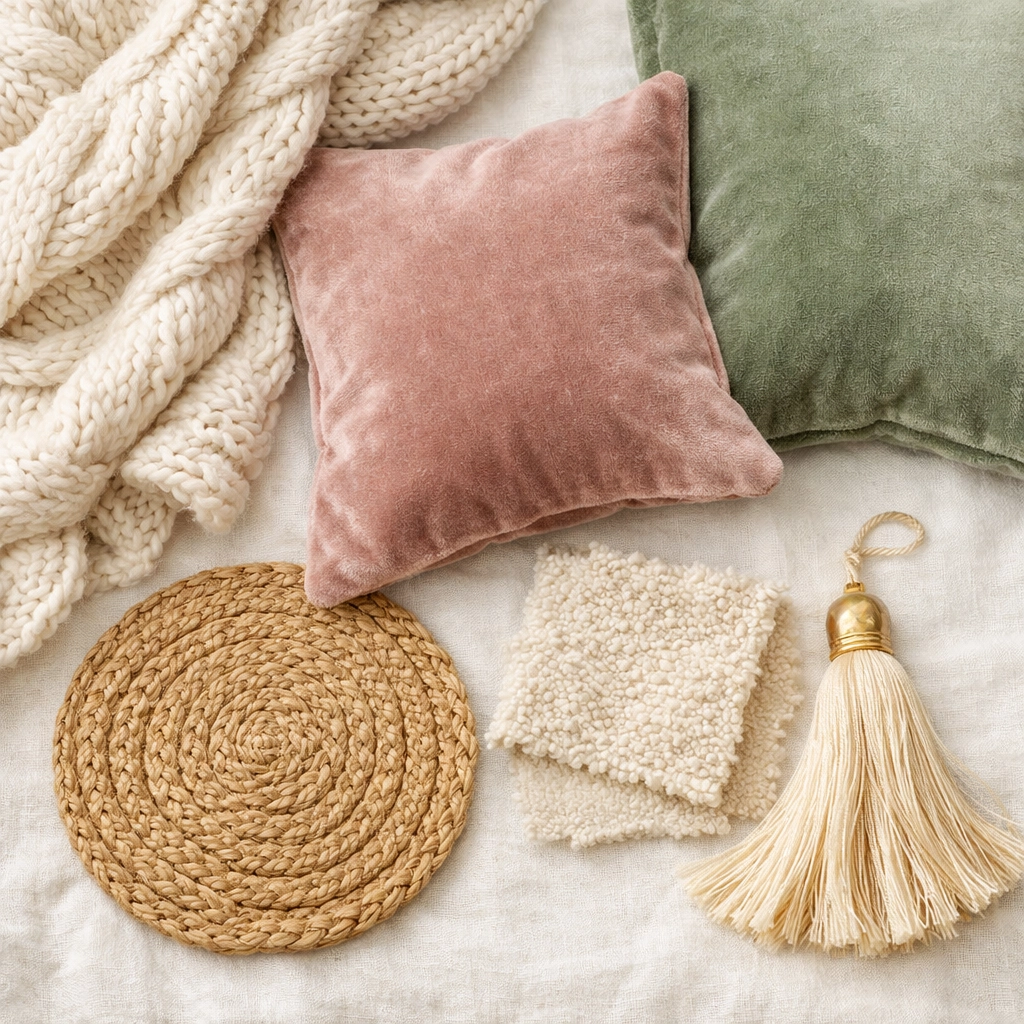
Here's something I discovered that completely changed my approach to budget decorating: texture is worth more than price when it comes to creating visual interest. A room filled with expensive furniture in one material looks flat. A room with affordable furniture in multiple textures looks curated and luxurious.
I'm talking about mixing velvet cushions with chunky knit throws, adding a woven basket or two, placing a jute rug under your coffee table, and incorporating both smooth and nubby fabrics. You can explore more texture layering techniques in my post about 5 textures that instantly make a budget space feel expensive.
The beauty of this approach is that you can shop charity shops, discount stores, and even your own cupboards to gather these textural elements. That vintage wool blanket from your nan? Drape it over your sofa. Those linen curtains you nearly donated? Perfect for adding softness. When you layer different materials, your eye travels around the room, creating visual richness that designer furniture alone can't achieve.
3. The Power of a Statement Sofa (That Doesn't Break the Bank)
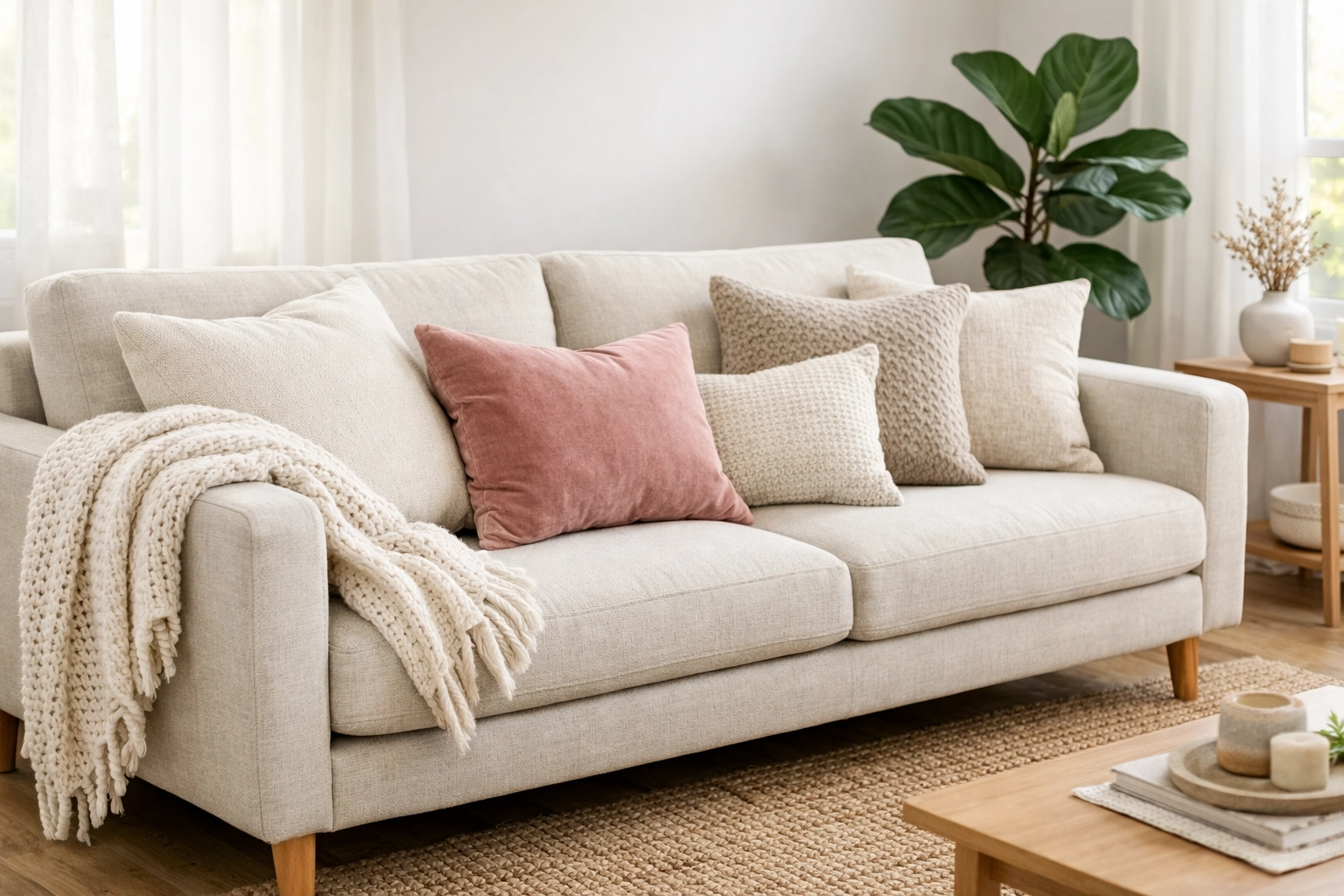
Let's talk about the elephant in the room: or rather, the sofa. It's typically the largest piece of furniture in your living space, which means it sets the tone for everything else. But here's the trick: you don't need a £3,000 designer sofa. You need one that looks well-proportioned, sits in a sophisticated colour, and gets styled beautifully.
I've seen incredible transformations using affordable sofas in lighter, neutral tones: think oatmeal, soft grey, or even a muted sage. Light-colored sofas create a sense of spaciousness and appear more upscale than darker alternatives. You can find solid options from brands like IKEA, Wayfair, or even Facebook Marketplace (seriously, some people sell barely-used furniture for a fraction of the original cost).
Once you've got your affordable base, the magic happens with styling. Add a mix of cushions in varying sizes and complementary textures, drape a beautiful throw across one arm, and position the sofa to create a conversational seating area. Suddenly, your £400 sofa looks like it cost ten times that amount.
4. Thrift, Refinish, and Repurpose with Intention
Some of my absolute favourite pieces in my living room are second-hand finds that I've given new life. Thrifting isn't just budget-friendly: it's also how you find truly unique pieces that add character to your space. The key is shopping with intention rather than impulse.
When you're browsing charity shops or car boot sales, look for solid wood pieces with good bones. That coffee table with ugly varnish? A weekend sanding project and some furniture paint can transform it into a statement piece. Those dated bookshelves? Paint them white or black, add some decorative brackets, and style them with books and plants.
I've also had success repurposing items for completely different functions. An old wooden ladder becomes a blanket holder. Vintage suitcases stack to create a quirky side table. A salvaged window frame becomes wall art. This approach gives you one-of-a-kind pieces that no amount of money can buy in a regular shop, and it tells a story about your space.
5. Create Cohesion Through a Defined Colour Palette
Want to know the fastest way to make a room look expensive? Create a cohesive colour story. Designers charge thousands for this service, but you can do it yourself by choosing three main colours and sticking to them throughout your space.
I typically recommend a 60-30-10 approach: 60% of your room in a dominant neutral (walls, large furniture), 30% in a secondary colour (accent chairs, curtains, rugs), and 10% in an accent colour for pops of interest (cushions, artwork, accessories). This creates harmony and intentionality: two hallmarks of expensive-looking spaces.
When everything coordinates rather than matches exactly, your room feels professionally designed. You're not looking for perfectly matched sets (which can actually read as cheap), but rather complementary tones that create a sophisticated flow. This is particularly effective if you're working with budget pieces from different sources: the unified colour palette ties everything together beautifully.
6. Style Your Surfaces Like a Professional
Here's something most people overlook: how you style your coffee table, side tables, and shelving makes an enormous difference in how expensive your room appears. Empty surfaces or cluttered chaos both scream "budget." Thoughtfully styled surfaces whisper "expensive."
The trick is following the rule of three: grouping items in odd numbers creates visual interest. On your coffee table, try a stack of beautiful books, a small plant or faux succulent arrangement, and a decorative object like a candle or sculptural piece. Vary the heights to create dimension.
For bookshelves, alternate between books (some stacked horizontally, others vertically), decorative objects, and small plants. Leave some breathing room: negative space is actually a design element. This curated approach makes even inexpensive accessories look considered and sophisticated. You can find loads more styling ideas in my art of layering guide.
7. Don't Underestimate the Rug
If I could only splurge on one element in a budget living room, it might just be the rug. A good rug anchors your entire seating area, defines the space, and adds warmth: both visual and literal. The difference between a room with and without a proper rug is honestly night and day.
That said, you don't need to spend thousands. Look for rugs during sales, check online retailers like Wayfair or Dunelm, or explore vintage options. The key considerations are size (make sure it's large enough that your front furniture legs sit on it) and pattern or texture that adds interest without overwhelming the space.
A beautiful jute rug creates organic texture, a geometric pattern adds modern sophistication, and a vintage-inspired Persian-style rug brings depth and richness. Whatever you choose, a well-selected rug makes every other piece of furniture in your room look more expensive by association. It's the foundation that pulls everything together: quite literally.
The Budget-Friendly Mindset Shift
Learning how to decorate on a budget isn't about making do with less: it's about being more creative, more intentional, and more resourceful than someone who simply throws money at the problem. When you approach your living room with these seven strategies, you're building a space that reflects your personality, not just your bank balance.
The truth is, expensive-looking rooms aren't always expensive: they're thoughtful. They're layered. They tell a story. And honestly? They're way more interesting than showroom perfection.
So before you save up for that designer sofa or splurge on overpriced accessories, try implementing these ideas. Mix high and low pieces. Hunt for treasures. Style with intention. Create texture and depth through lighting and layering. Your living room can absolutely look expensive on a budget: it just requires a slightly different approach.
For more renter-friendly decorating ideas, check out my guide on how to make a drab rental living room feel like a boutique hotel.
Warmly,
Maria
P.S. For more budget-friendly ideas and cosy vibes, come hang out with us on our Charming Homescape Pinterest boards!
Leave a Reply