
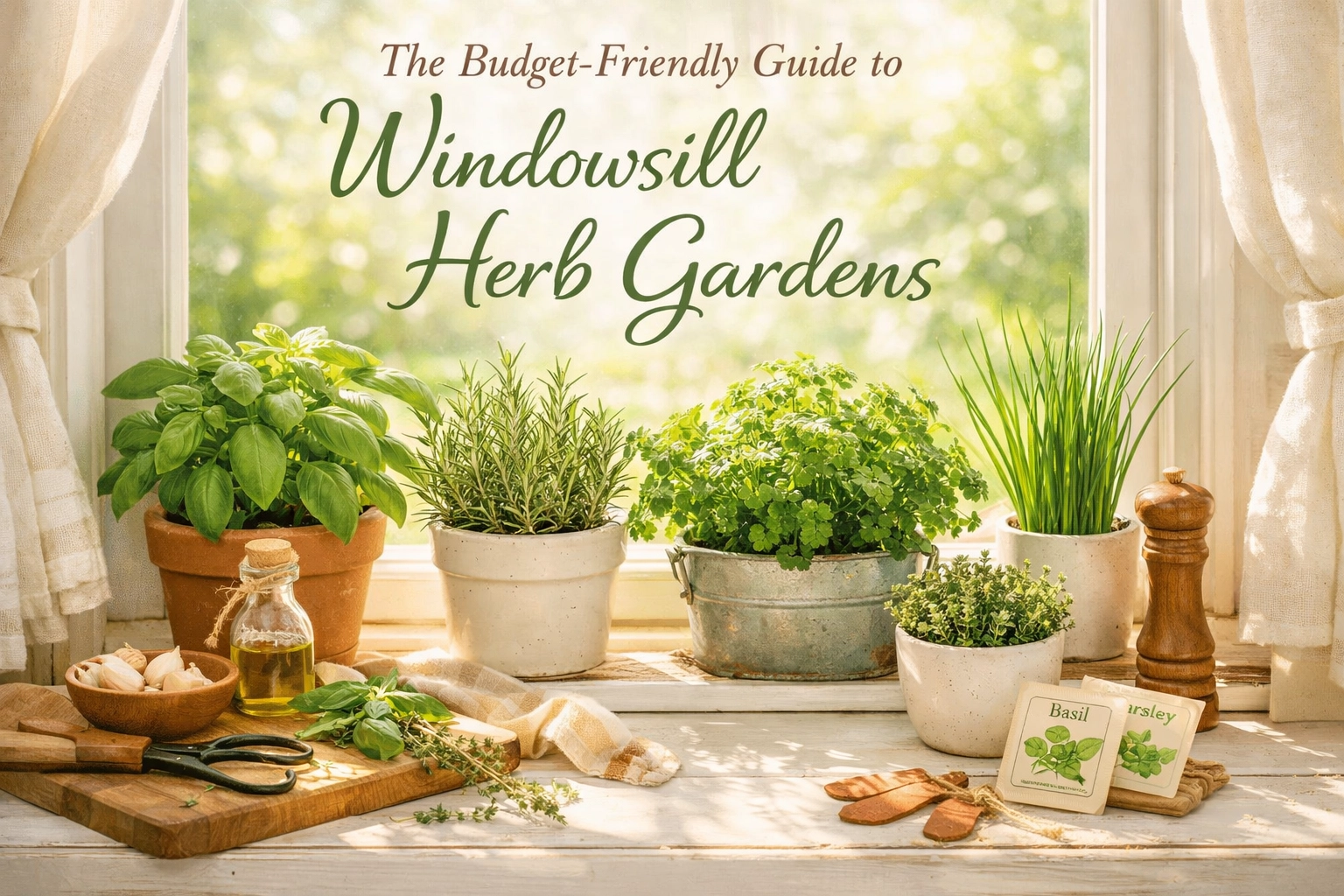
There’s something wonderfully satisfying about snipping fresh basil from your windowsill on a Tuesday evening, adding it to your pasta sauce, and knowing you didn’t spend £3.50 on a plastic container from the supermarket that would’ve wilted by Thursday. If you’ve been thinking about starting a windowsill herb garden but worry about the cost or complexity, I’m here to tell you it’s one of the most affordable, rewarding projects you can tackle this spring: and it’s far easier than you might imagine.
This post contains affiliate links, which means I may receive a small commission at no cost to you if you make a purchase.
A small collection of herbs growing on your kitchen windowsill transforms your cooking, saves you money throughout the year, and brings a touch of nature into your home. Plus, there’s something genuinely charming about having living plants within arm’s reach while you’re preparing meals. Let’s walk through how to create your own budget-friendly herb garden without breaking the bank.
Why a Windowsill Herb Garden Makes Perfect Sense
Before we dive into the how-to, let’s talk about why this project is worth your time. Fresh herbs from the grocery store typically cost between £2-4 per package, and let’s be honest: how often do those packages go slimy in the back of your fridge before you’ve used them all? A windowsill garden provides fresh herbs year-round for a fraction of that ongoing cost.
Beyond the financial benefits, growing your own herbs means you control what goes on them (no pesticides unless you choose them), you reduce plastic packaging waste, and you get the therapeutic benefits of tending to living plants. Even on the greyest British winter day, a sunny windowsill full of green, fragrant herbs lifts the spirits considerably.
Getting Started: Containers That Won’t Cost a Fortune
Here’s where we get practical and creative. You don’t need to invest in expensive terracotta pots or designer planters to create a thriving herb garden. In fact, some of the most charming setups I’ve seen use completely repurposed materials.
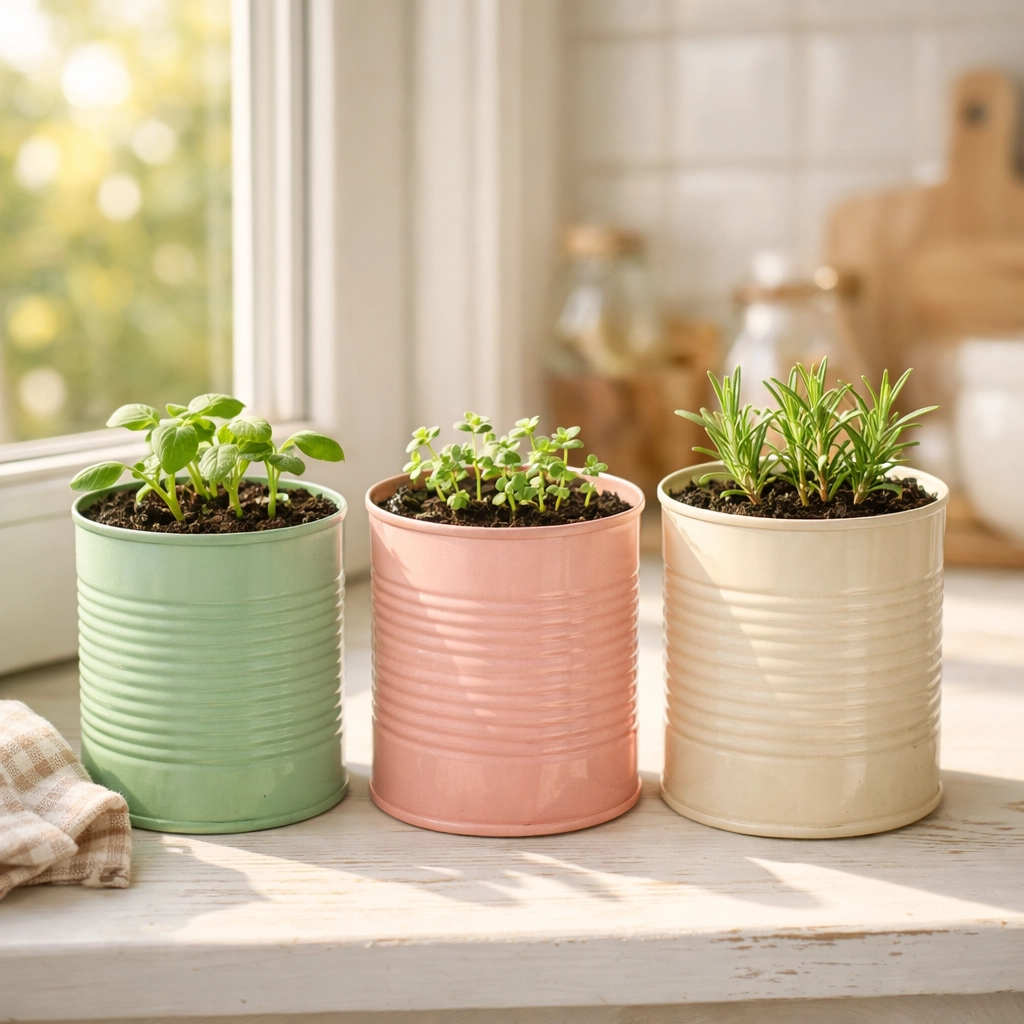
Tin cans are genuinely brilliant for this. Save your empty tomato tins, soup cans, or bean tins: give them a good wash, peel off the labels, and you’ve got free containers. If you’re feeling creative, a quick coat of spray paint in complementary colours can turn these humble cans into something quite stylish. Just remember to punch a few drainage holes in the bottom using a hammer and nail (do this before painting, and be careful of sharp edges).
Old mugs, teacups, or small bowls that have lost their matching pieces also work beautifully, adding a quirky, cottage-style charm to your windowsill. Mason jars are another option, though you’ll need to be more careful with watering since they don’t drain as easily.
If you prefer to buy something new, look for affordable plant pots on Amazon that come in multi-packs: you can often find sets of 6-10 small pots for under £10. Metal tubs or troughs (around £50) can accommodate multiple herbs together if you want a more cohesive look, though this certainly isn’t necessary for success.
Whatever container you choose, aim for at least 6 inches of depth. This gives roots adequate space and allows you to add a layer of small rocks or broken pottery at the bottom for drainage. Some herbs with shallow roots can manage in slightly smaller containers, but deeper is generally better and more forgiving.
Location, Location, Location: Finding the Perfect Spot
This is arguably the most important factor in your herb garden’s success. Insufficient light is the single most common reason windowsill herb gardens struggle, so choosing the right location matters immensely.
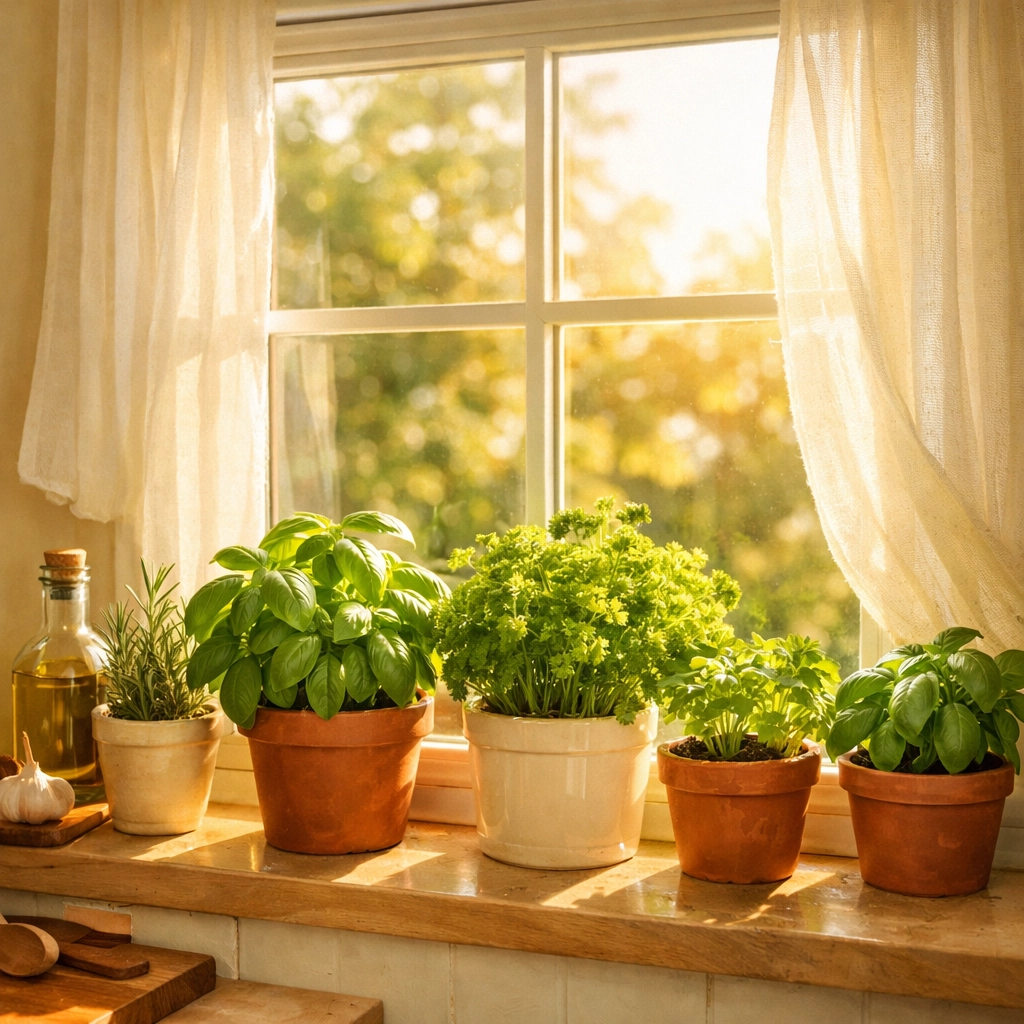
Your herbs need at least 5-6 hours of sunlight daily to truly thrive. In the UK, this typically means a south-facing or southwest-facing window. East-facing windows can work during spring and summer when days are longer, but they may not provide enough light during winter months. West-facing windows are a bit of a gamble: they can work, but you’ll need to monitor how your herbs respond.
If your kitchen doesn’t have ideal natural light, don’t despair completely. Small LED grow lights are increasingly affordable and can be mounted under kitchen cabinets to supplement whatever natural light you have. Look for LED grow lights on Amazon designed for herbs: you can often find compact options for under £20 that make a real difference.
The Right Foundation: Soil and Drainage
Don’t skimp on soil quality: this is one area where spending a few extra pounds really pays off. Invest in proper potting soil from Amazon rather than using garden soil, which compacts too densely in containers and doesn’t provide the drainage herbs need. A decent bag of potting mix costs around £5-8 and will easily fill a dozen small pots.
Before adding soil to your containers, place a layer of small rocks, broken terracotta pieces, or even wine corks at the bottom. This creates drainage space so roots don’t sit in water, which herbs absolutely detest. If you’re using tin cans or other containers with drainage holes, line the bottom with a small piece of burlap or coffee filter to prevent soil from washing out while still allowing water to escape.
Set your pots on saucers or a waterproof tray to catch excess water and protect your windowsill. You can find plant saucers affordably, or repurpose old plates and shallow dishes you already own.
Choosing Your Herbs: What Grows Best Indoors
Not all herbs are equally suited to indoor windowsill life, so focus on varieties that are naturally hardy and forgiving. Here are the superstars:
Basil is wonderfully productive and grows enthusiastically on a sunny windowsill. It’s perfect for summer dishes and grows relatively quickly from seed (3-4 weeks to first harvest). The fragrance alone makes it worthwhile.
Parsley (both flat-leaf and curly varieties) is incredibly versatile in cooking and remarkably hardy. It germinates within days from seed and keeps producing for months with regular harvesting.
Chives are nearly indestructible, require minimal fussing, and provide both herbs and edible flowers. They’re particularly good if you’re new to herb growing.
Thyme loves sunny spots and doesn’t mind if you occasionally forget to water it. The woody stems mean it stays compact and tidy on your windowsill.
Rosemary brings a lovely aromatic presence and works beautifully in roasts and Mediterranean dishes. It prefers slightly drier conditions than other herbs, which actually makes it easier to care for.
These herbs all belong to families with relatively shallow roots, meaning they’re perfectly happy in 6-inch-deep containers. If you want to try cilantro, dill, or fennel, you’ll need deeper pots (at least 12 inches) to accommodate their longer root systems.
Starting Your Garden: Seeds vs. Plants
You have two main options for starting your herb garden, each with distinct advantages.
Buying small plants from a garden centre or nursery means you can start harvesting immediately. Young herb plants typically cost £1-3 each, and you get the instant gratification of an established garden. This approach works brilliantly if you’re eager to start cooking with your herbs right away or if you’re trying this for the first time and want to minimize the learning curve.
Growing from seeds is more economical and offers a wider variety of herbs to choose from. A packet of herb seeds from Amazon costs under £2 and provides dozens of plants’ worth of seeds. It takes longer (most herbs need 2-4 weeks before first harvest), but there’s something magical about watching seeds germinate and grow under your care.
If you’re working with children or simply enjoy the process, seeds offer wonderful educational value. For the most practical approach, consider combining both methods: buy a couple of established plants for immediate use while starting others from seed for future harvests.
Daily Care: Easier Than You Think
Windowsill herbs don’t require constant attention, but they do need some regular care to thrive. Here’s what matters most:
Watering is where most people either over-do it or under-do it. The secret is checking soil moisture rather than following a rigid schedule. Insert your finger about an inch below the soil surface: if it feels dry, water thoroughly until water drains from the bottom. If it still feels moist, wait another day or two. Indoor pots dry out faster than outdoor gardens, so you’ll likely water every 2-3 days, more frequently in heated homes during winter.
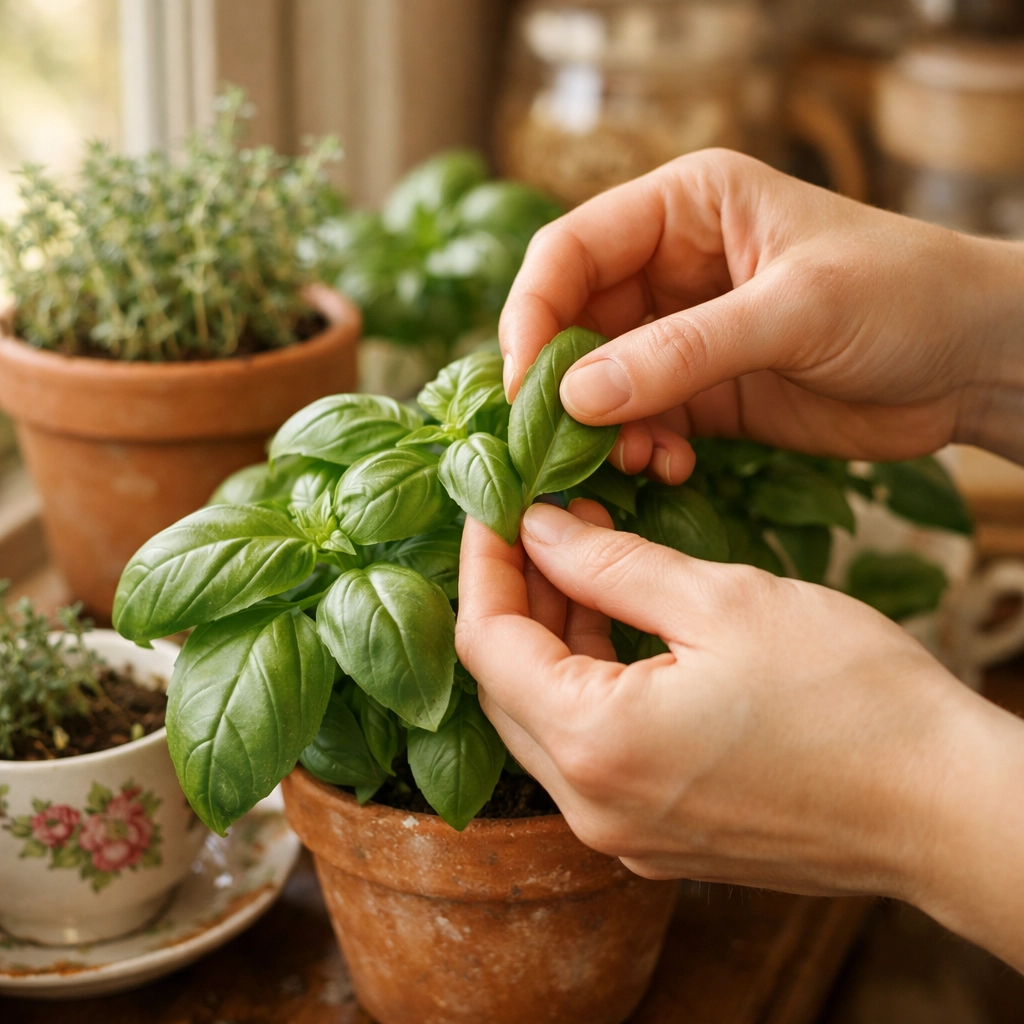
Harvesting regularly actually encourages bushier, more productive growth. Don’t be shy about trimming your herbs: pinch or cut stems just above a leaf node (where leaves meet the stem), and the plant will branch out from that point. This keeps plants compact rather than leggy.
Rotating your pots occasionally ensures even growth on all sides, as plants naturally lean toward light sources. A quick quarter-turn every few days keeps them growing straight and balanced.
Watch for yellowing leaves, which might indicate overwatering, or pale, leggy growth, which suggests insufficient light. These issues are easily corrected once you notice them.
The Spring Advantage: Perfect Timing
Starting your herb garden in spring gives you natural advantages. Longer days mean more sunlight, warmer temperatures encourage faster growth, and the general renewal of the season makes tending plants feel particularly rewarding. Plus, spring is when garden centres stock the best selection of young herb plants and seeds become readily available.
As we move into March and April, windowsills warm up beautifully during the day, creating ideal conditions for herbs to establish strong root systems. By summer, you’ll have thriving plants producing abundantly just when you’re most likely to be cooking fresh, light meals that showcase herbs beautifully.
Making It Work Long-Term
The beauty of a windowsill herb garden is its year-round potential. While some herbs may slow their growth during darker winter months, many will continue producing with proper care and perhaps supplemental lighting. The investment of time and minimal money you make now pays dividends for months: potentially years: to come.
Consider this: if buying fresh herbs costs you £3 per week, that’s roughly £150 annually. Your entire windowsill garden setup: pots, soil, seeds or plants, and supplies: can easily come together for £20-40 depending on what you already have at home. The savings become apparent within just a couple of months, not to mention the convenience and quality improvements.
This project beautifully demonstrates how thoughtful, creative approaches can bring both practicality and charm into your home without requiring significant financial investment. Your kitchen becomes more functional, more beautiful, and more connected to the seasons and natural world: all from a sunny windowsill and a handful of containers you might otherwise have recycled.
If you’re looking for other ways to bring nature indoors affordably, you might enjoy our guide on creating a clutter-free home with stylish storage hacks, which includes ideas for incorporating plants into organized spaces.
Whether you start with a single tin can of basil or create an entire windowsill herb collection, you’re cultivating something genuinely valuable: fresh flavours, ongoing savings, and the quiet satisfaction of growing food in your own home. Here’s to fresh herbs, creative reuse, and the simple pleasures of home gardening.
Warmly,
Maria
P.S. For more budget-friendly ideas and cozy vibes, come hang out with us on our Charming Homescape Pinterest boards!
Leave a Reply