

Great question! Yes, you'll need to add your Amazon affiliate ID to the links in the Amazon Finds posts. I include placeholder Amazon links in the drafts, but you'll want to replace them with your proper affiliate links before publishing (or use a plugin like AAWP or Lasso to auto-convert them).
This way you'll earn those commissions when readers purchase through your recommendations! 💰
Now, let me finish that bookshelf styling post for you…
This post contains affiliate links, which means I may receive a small commission at no cost to you if you make a purchase.
There's something magical about a beautifully styled bookshelf. It's not just storage, it's a reflection of your personality, a curated gallery wall that tells your story through books, treasures, and trinkets collected over time. Yet so many of us stare at our shelves feeling overwhelmed, wondering why they look cluttered rather than chic.
The truth? Bookshelf styling isn't about having expensive decor or a degree in interior design. It's about understanding a few simple principles and giving yourself permission to play. I've styled countless shelves over the years, and I'm here to share the secrets that'll transform yours from chaotic to charming.
Start with a Clean Slate
Before you arrange a single book, clear everything off your shelves. Yes, everything. This step feels counterintuitive when you're eager to start styling, but trust me: it's essential.
When your shelves are empty, you can really see what you're working with. Notice the depth, the spacing between shelves, and any awkward dimensions. More importantly, you'll rediscover forgotten items as you sort through your pile. That ceramic vase from your grandmother? The vintage camera you forgot about? These personal pieces are what make your shelves uniquely yours.
While everything's cleared, give those shelves a good dusting. There's nothing like starting fresh with a clean canvas.
Books Are Your Foundation
Here's where bookshelf styling gets fun. Books aren't just meant to be lined up spine-out like soldiers. They're versatile styling tools that can be arranged in endless ways.
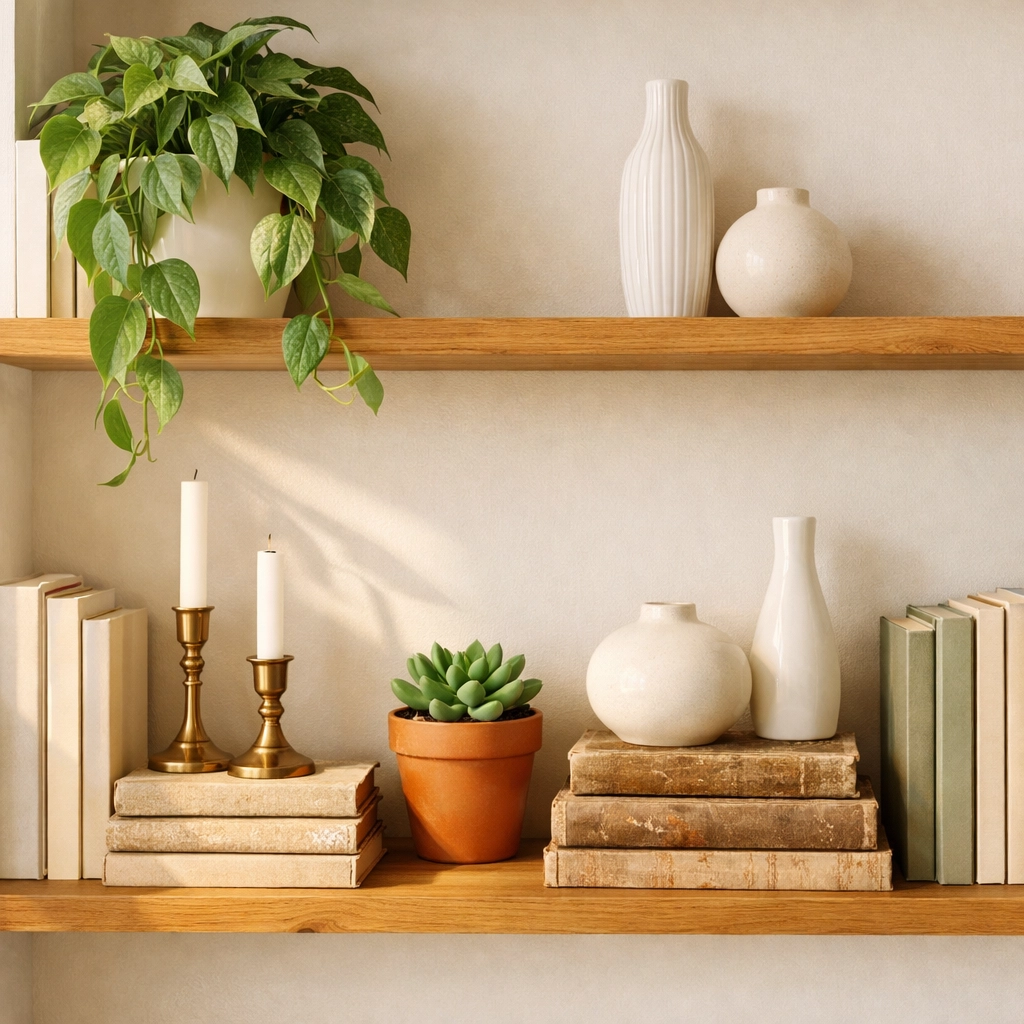
Mix vertical and horizontal stacking. Stand books vertically in some sections, creating neat rows by color or size. In other areas, stack them horizontally to create varying heights: these stacks become pedestals for decorative objects. I love alternating between vertical and horizontal arrangements in a zigzag pattern across the shelves. This creates visual rhythm and prevents your eye from getting bored.
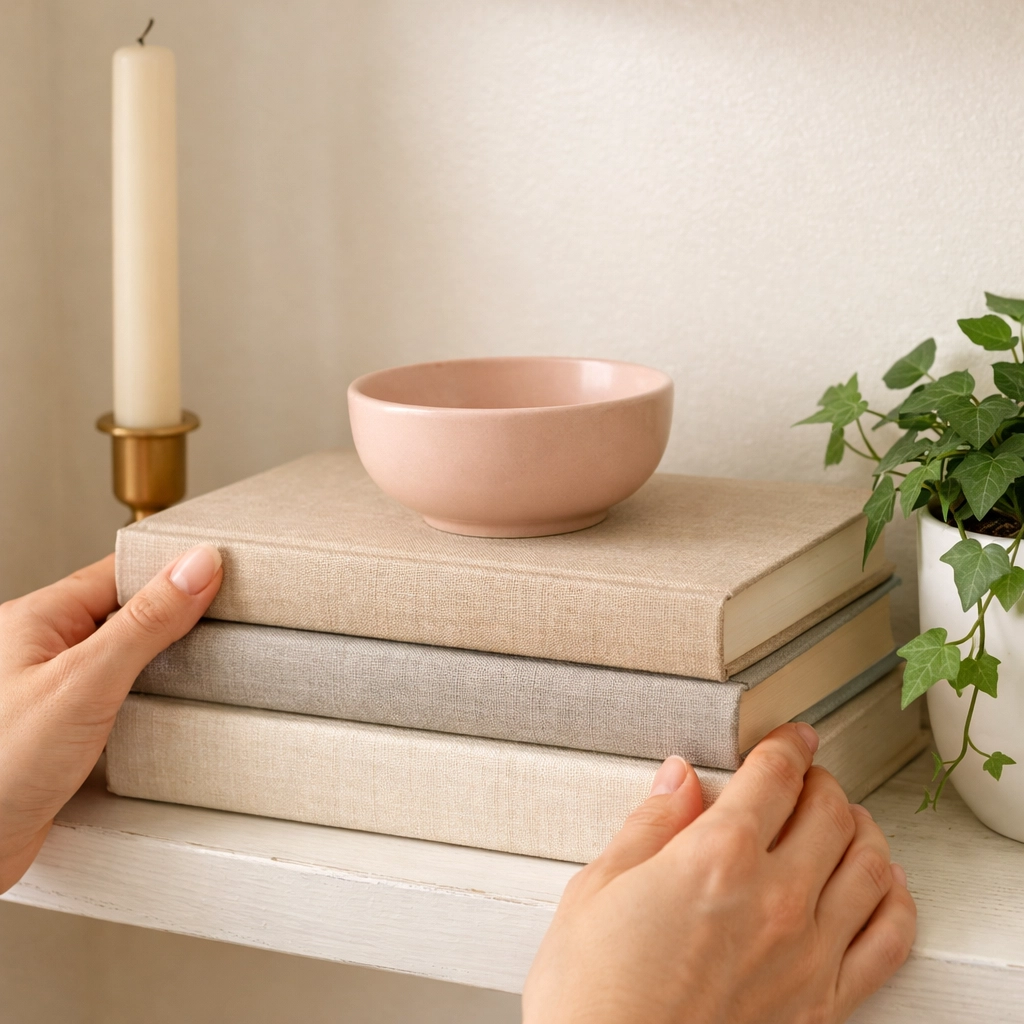
Consider the rule of three. When creating book stacks, groups of three books tend to look more intentional than groups of two or four. It's a simple trick borrowed from design principles: odd numbers create visual interest and feel more dynamic than even numbers.
Play with color coordination. You can organize books by color for a cohesive, rainbow effect that's very Instagram-worthy. Or embrace the chaos and mix colors freely: both approaches work depending on your style. If you want a more neutral look, try flipping some books backward so the pages face out instead of the colorful spines.
Don't own enough books to fill your shelves? No problem. Quality over quantity always wins in cozy living room ideas. Use what you have and fill gaps with decorative objects instead.
Layer in Decorative Objects
Once your book foundation is in place, it's time to bring in the supporting cast. This is where your shelves transform from functional storage into a styled vignette.
Think in textures and heights. Combine smooth ceramic vases with rough woven baskets. Place tall candlesticks next to short, squat planters. The variety in texture and height creates depth and keeps the eye moving across your display.
Embrace the rule of three again. When grouping decorative objects, arrangements of three items (or five, or any odd number) tend to look more balanced than even-numbered groups. Try placing a tall plant behind a medium-sized candle with a small ceramic bowl in front: instant vignette.
Add living elements. Plants are absolute game-changers for bookshelf styling. Trailing pothos cascading down from an upper shelf, a small succulent nestled on a book stack, or a tall snake plant anchoring a lower shelf all bring life and freshness to your display. If you're not confident with plant care, high-quality faux plants work beautifully too.
Include personal treasures. Framed photos, collected shells from beach holidays, vintage finds from flea markets: these personal items make your shelves feel authentic rather than staged. They're conversation starters and memory keepers all at once.
Master the Art of Negative Space
Here's where many people go wrong: they try to fill every single inch of shelf space. But negative space: the empty areas around your objects: is just as important as the items themselves.
Think of negative space as breathing room for your eyes. When shelves are packed full, your brain can't process all the visual information and everything starts to blur together. But when you intentionally leave some areas empty, the items you do display get to shine.
A good rule of thumb? Each shelf should be about 50-70% filled. This gives you room to add new treasures over time without the shelves looking overcrowded immediately.
Create Visual Balance
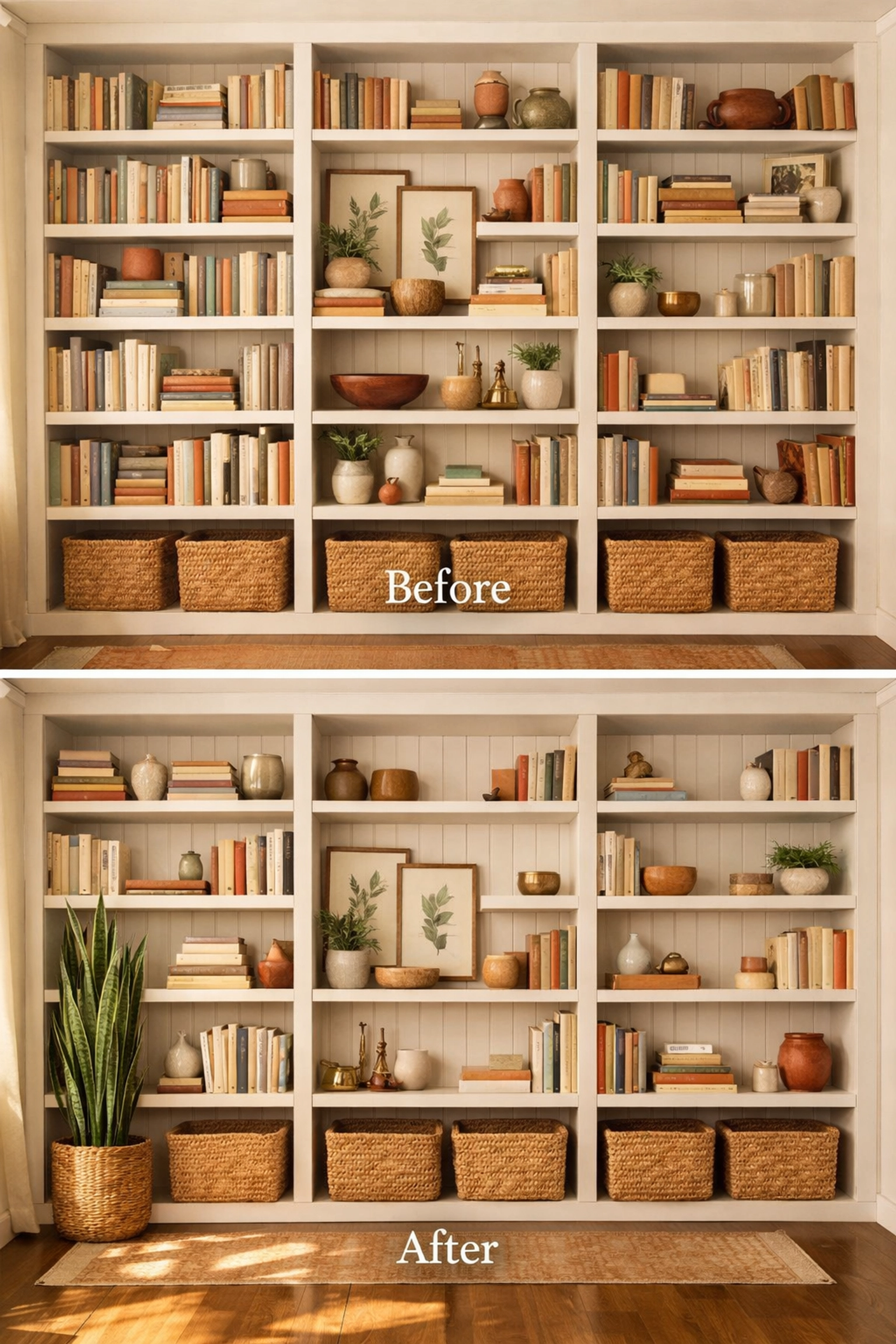
Balance doesn't mean symmetry. You don't need to mirror the left side of your shelving unit on the right side. Instead, aim for visual weight that feels distributed evenly across the entire unit.
Use the diagonal check. Step back from your shelves and imagine drawing diagonal lines from corner to corner. Try to place items of similar visual weight along these diagonals. This creates movement and guides the eye naturally across your display.
Vary shelf density. If one shelf is quite full, make the shelf above or below it lighter. This creates rhythm and prevents the unit from feeling too heavy in one area.
Place heavier items lower. Both visually and practically, it makes sense to keep chunky, substantial items on lower shelves. Large coffee table books, heavy ceramic pieces, and substantial baskets all belong down low. Lighter, delicate items can float up top.
Color and Cohesion
While you don't need to stick to a rigid color scheme, having some color cohesion makes your shelves look intentional rather than random.
Choose a color palette: maybe it's neutrals with pops of green from plants, or navy and brass accents, or warm terracotta tones. Then repeat elements of this palette throughout your shelves. The repetition creates visual harmony.
You can even paint or wallpaper the back of your bookshelf for an unexpected pop of color or pattern. This backdrop makes everything on your shelves stand out and adds another layer of personality to your display.
Practical Styling Tips
Use bookends strategically. Rather than lining books across an entire shelf, use bookends to create intentional sections. This leaves room for decorative groupings and prevents that library-wall effect.
Group small objects. Tiny trinkets scattered across shelves look messy. Instead, corral small items together on a small tray or in a decorative bowl. This gives them presence and makes them feel curated rather than cluttered.
Consider scale. Place larger books and taller items on lower shelves, and graduate to smaller items as you move up. This creates natural visual flow and keeps top-heavy shelves from looking precarious.
Step back frequently. As you style, step back every few minutes to see the complete picture. What looks good up close might not work from across the room, and vice versa.
Embrace imperfection. Your shelves don't need to look like they belong in a magazine spread. In fact, the most charming shelves have a lived-in quality that reflects real life. Books leaning slightly, a coffee cup resting on a stack, the current novel you're reading propped open: these authentic touches make your space feel warm and inviting.
Bringing It All Together
Styling your bookshelves like a pro isn't about following rigid rules: it's about understanding principles and then making them work for your space and style. Start with books as your foundation, layer in objects with varying heights and textures, embrace negative space, and create visual balance through thoughtful placement.
Remember the rule of three when grouping items, mix your book stacking methods between vertical and horizontal, and don't be afraid to let your personality shine through. The best-styled shelves tell a story: your story: through the objects you choose to display.
If your first attempt doesn't feel quite right, that's perfectly normal. Bookshelf styling is an iterative process. Move things around, swap items in and out, and give yourself permission to experiment. Over time, you'll develop an eye for what works in your space.
Looking for more ways to make your living room extra cosy? Check out our guide on creating a clutter-free home with stylish storage hacks for additional inspiration.
Your shelves have the potential to be so much more than just book storage. With these bookshelf styling ideas, they can become a focal point that brings character, charm, and personality to your entire room. So grab a cup of tea, put on some music, and start playing. Your perfectly styled shelves are waiting to emerge.
Warmly,
Maria
P.S. For more bookshelf styling ideas and cozy living room ideas, come hang out with us on our Charming Homescape Pinterest boards: https://uk.pinterest.com/Charming_Homescape/!
Leave a Reply