
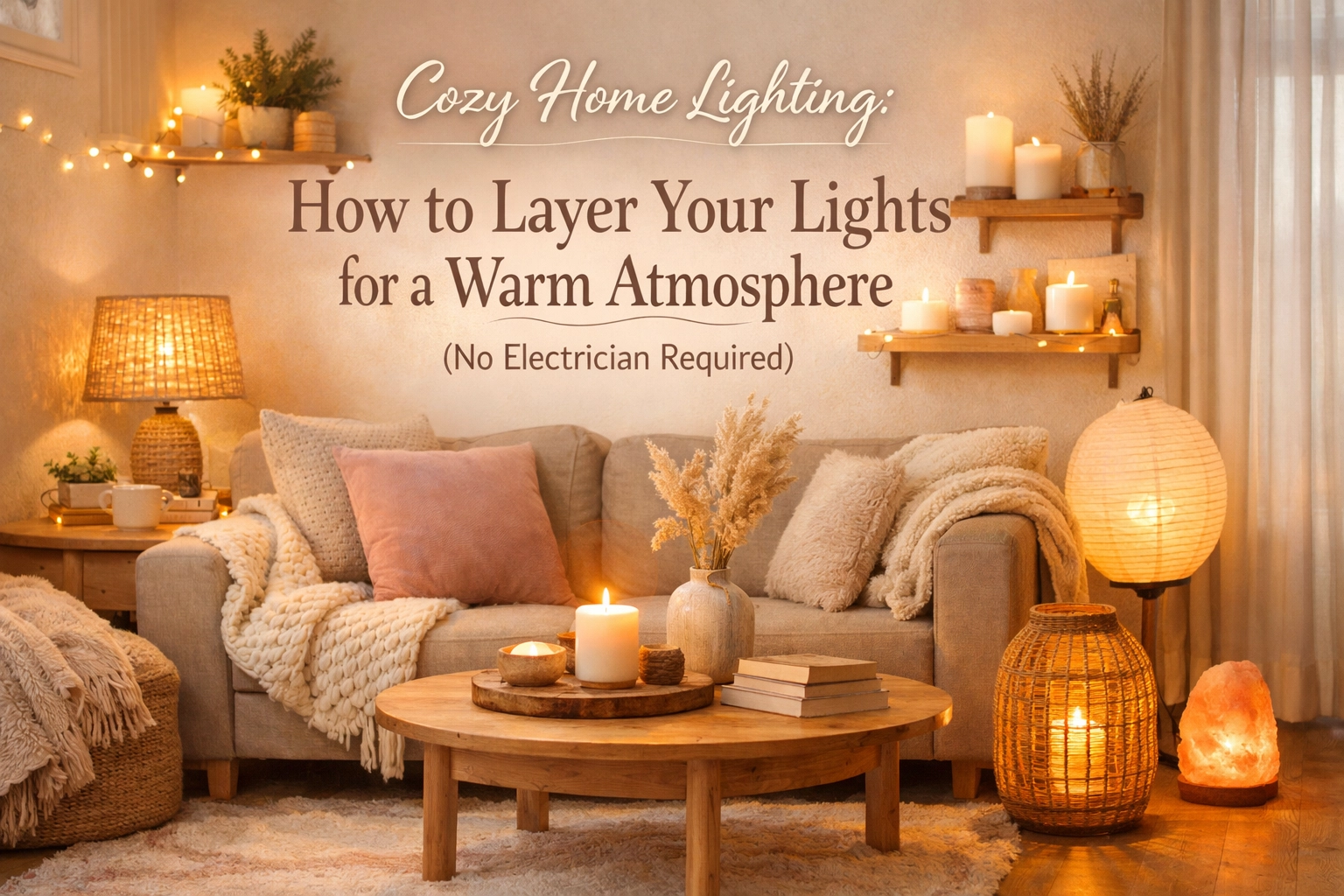
You know that feeling when you walk into a room and something just feels… off? Nine times out of ten, it's the lighting. I've been there: staring at a harsh overhead fixture that makes my living room look like a doctor's office waiting room. The truth is, relying on a single ceiling light is the fastest way to create a flat, uninviting space with weird shadows in all the wrong places.
The good news? Creating that warm, layered glow you see in magazines doesn't require rewiring your entire house or calling an electrician. With a few strategically placed lamps, some clever LED strips, and a bit of planning, you can completely transform the atmosphere of any room. Let me walk you through exactly how to layer your lighting like a pro: no hardwiring required.
This post contains affiliate links, which means I may receive a small commission at no cost to you if you make a purchase.
Understanding the Three-Layer Approach
The secret to cozy, inviting lighting is layering three distinct types of fixtures: ambient, task, and accent lighting. Think of it like getting dressed: you wouldn't wear just a t-shirt in winter, right? You'd add layers for warmth and style. Lighting works the same way.
Ambient lighting is your foundation layer. This is the general illumination that fills the room: things like floor lamps or even your existing overhead fixture (though we're going to minimize reliance on that harsh ceiling light). Ambient lighting provides your baseline brightness so you can safely navigate the space.
Task lighting is where function meets style. These are the lights that help you actually do things: reading on the sofa, chopping vegetables in the kitchen, or working at your desk. Table lamps next to your favourite chair, under-cabinet strips in the kitchen, or a desk lamp all fall into this category.
Accent lighting is the cherry on top. This layer adds drama and visual interest by highlighting specific features: artwork on the wall, a beautiful plant in the corner, or architectural details like exposed brick. It's optional, but it's what takes a room from "nice" to "wow."
Many interior designers follow the 70-30 rule: devote about 70 percent of your lighting to ambient sources and 30 percent to task lighting. If you have architectural features you want to show off, consider adding another 10 percent for accent lighting. But honestly? Don't stress too much about the exact percentages: just aim for variety.
The Secret Ingredient: Warmth and Colour Temperature
Here's something most people don't realize until they've made the mistake: not all light bulbs are created equal. The colour temperature of your bulbs makes a massive difference in how cozy a space feels.
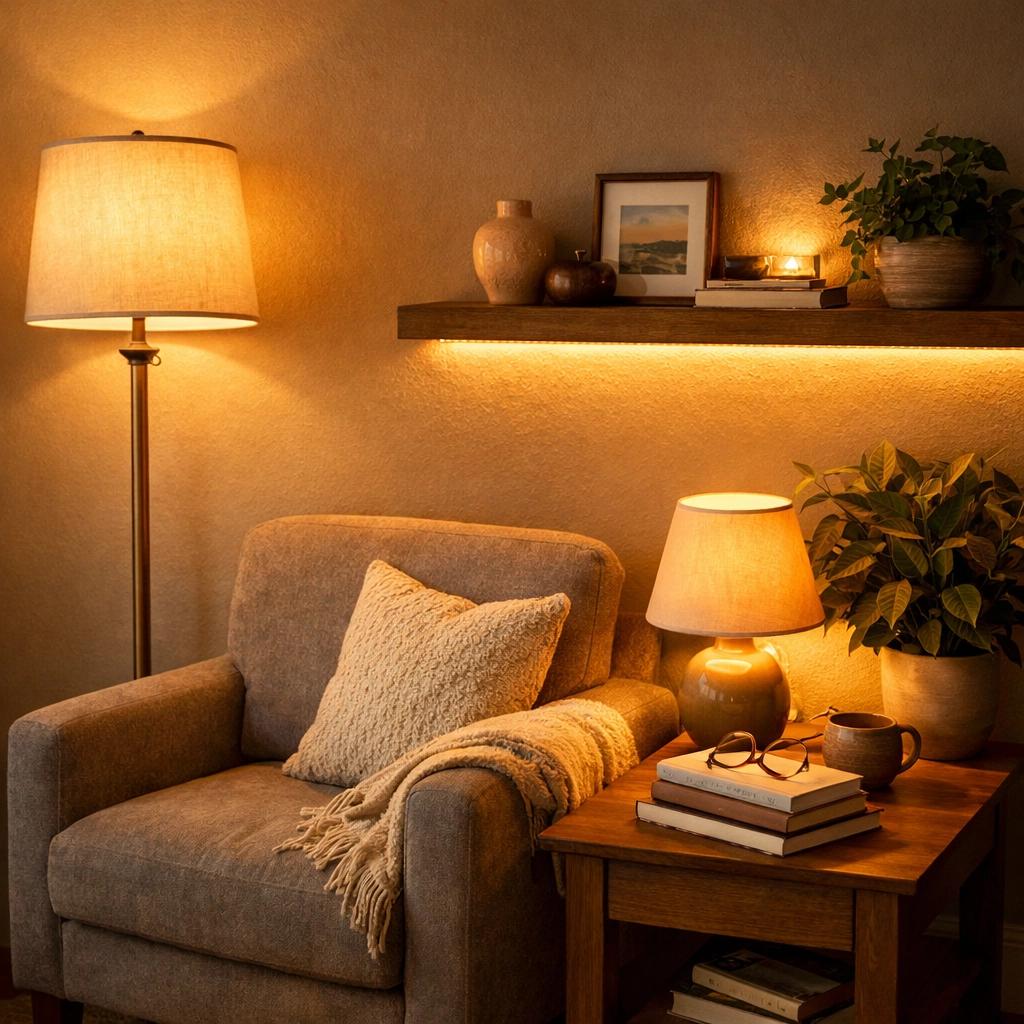
Look for bulbs in the warm range: between 2700K and 3000K. These create that golden, sunset-like glow that immediately makes a room feel inviting. Anything above 4000K starts to feel clinical and cold, like you're in an office cubicle. Trust me, I once accidentally bought "daylight" bulbs (5000K+) for my bedroom and couldn't figure out why I felt so on-edge every evening. Swapping them out for warm LED bulbs was a game-changer.
Another trick? Use fabric lampshades to diffuse the light. Bare bulbs or metal shades create harsh, direct light that isn't particularly cozy. A simple fabric shade softens everything beautifully, creating that warm glow we're after.
And here's a pro tip: don't make all your lights the same brightness. Variety is what creates atmosphere. Pair a dim, ambient glow with brighter task lighting in specific spots. This contrast adds depth and allows you to adjust the mood depending on whether you're hosting friends or curling up with a book.
DIY Installation Ideas (No Electrician Needed!)
This is where the magic happens: and where you save yourself hundreds of pounds on professional installation. Almost all of these solutions plug into regular outlets or run on batteries.
Corner lamps are your best friend. I love placing small table lamps or slender floor lamps in corners to ground the space. These create intimate pools of light that make a room feel finished and intentional. If you're working with a tight budget, even inexpensive lamps can work wonders: just upgrade the bulb to something warm and quality.
LED strip lights are incredibly versatile. These adhesive-backed strips stick under shelving, inside cabinets, or along the back of your TV console. I particularly love using warm LED strips under kitchen cabinets: they add task lighting for cooking prep without the visible dots of individual bulbs. Plus, they're battery-operated or plug-in, so no wiring required.
Uplighting creates serious drama. Place a small uplight behind a large plant or in a corner to wash the wall with soft, indirect light. It adds depth and makes ceilings feel higher. You can find affordable uplights that simply plug into the wall.
Vary your heights and sizes. Instead of matching lamps on every surface, mix it up. A tall floor lamp next to the sofa, a medium table lamp on a side table, a small accent light on a bookshelf: this creates a more organic, layered feel rather than that matchy-matchy hotel room vibe.
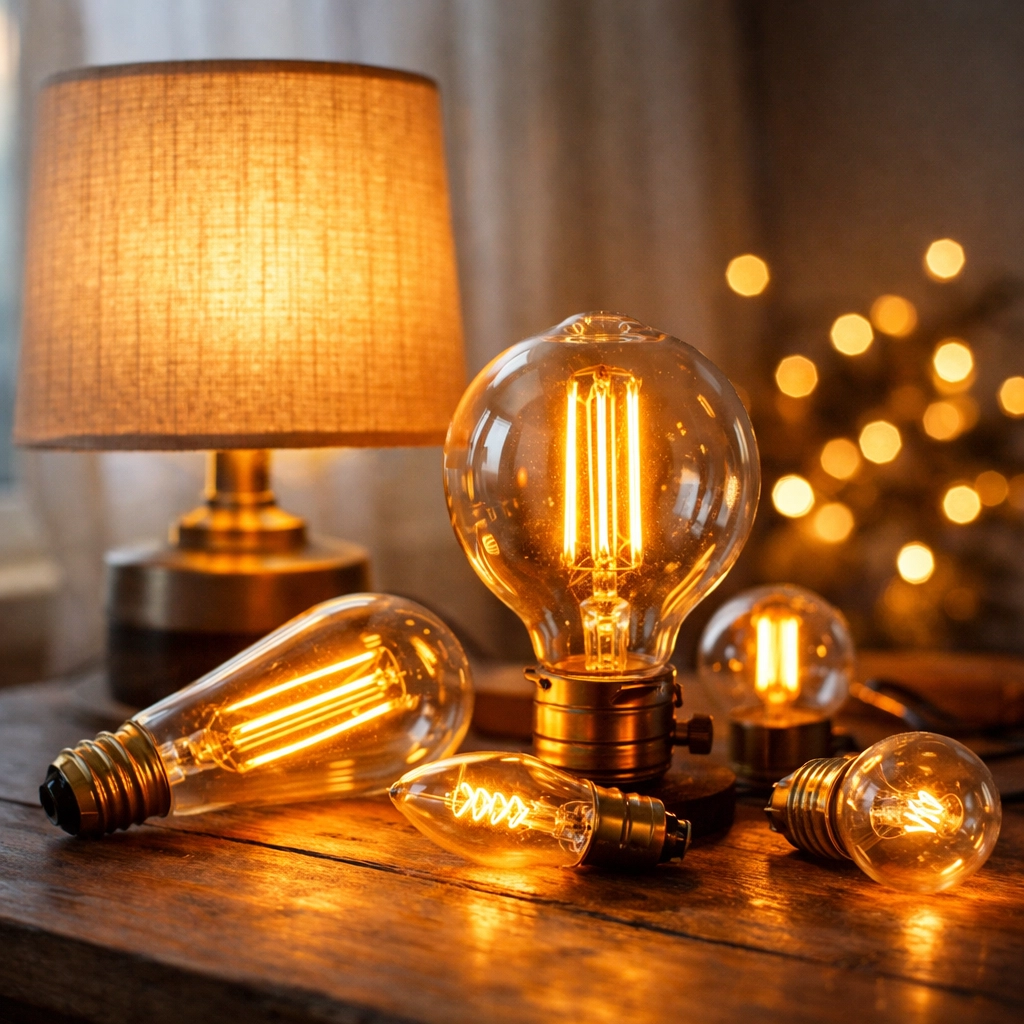
Smart controls are a worthy investment. You don't need to rewire anything to get dimmer functionality. Smart bulbs or smart plugs let you control brightness and even colour temperature from your phone. You can create different "scenes": bright for cleaning, medium for cooking, dim for movie night: and switch between them instantly. It's genuinely life-changing.
Room-by-Room Strategies
Living Rooms: This is where layered lighting really shines. Start with a floor lamp behind or beside the sofa for ambient light. Add table lamps on either side of a fireplace or on end tables to create symmetry and balance. If you have artwork, consider small picture lights (battery-operated ones are brilliant for renters) to add that accent layer. Don't forget about creating a dedicated reading nook: a cozy chair with its own lamp makes all the difference.
Dining Rooms and Kitchens: Your main fixture over the dining table becomes a focal point: whether it's your existing pendant or a plug-in swag chandelier you can hang without hardwiring. Then layer in perimeter lighting with wall sconces or smaller lamps on sideboards. In the kitchen, under-cabinet LED strips are non-negotiable: they make food prep so much easier and add warmth when overhead lights are off.
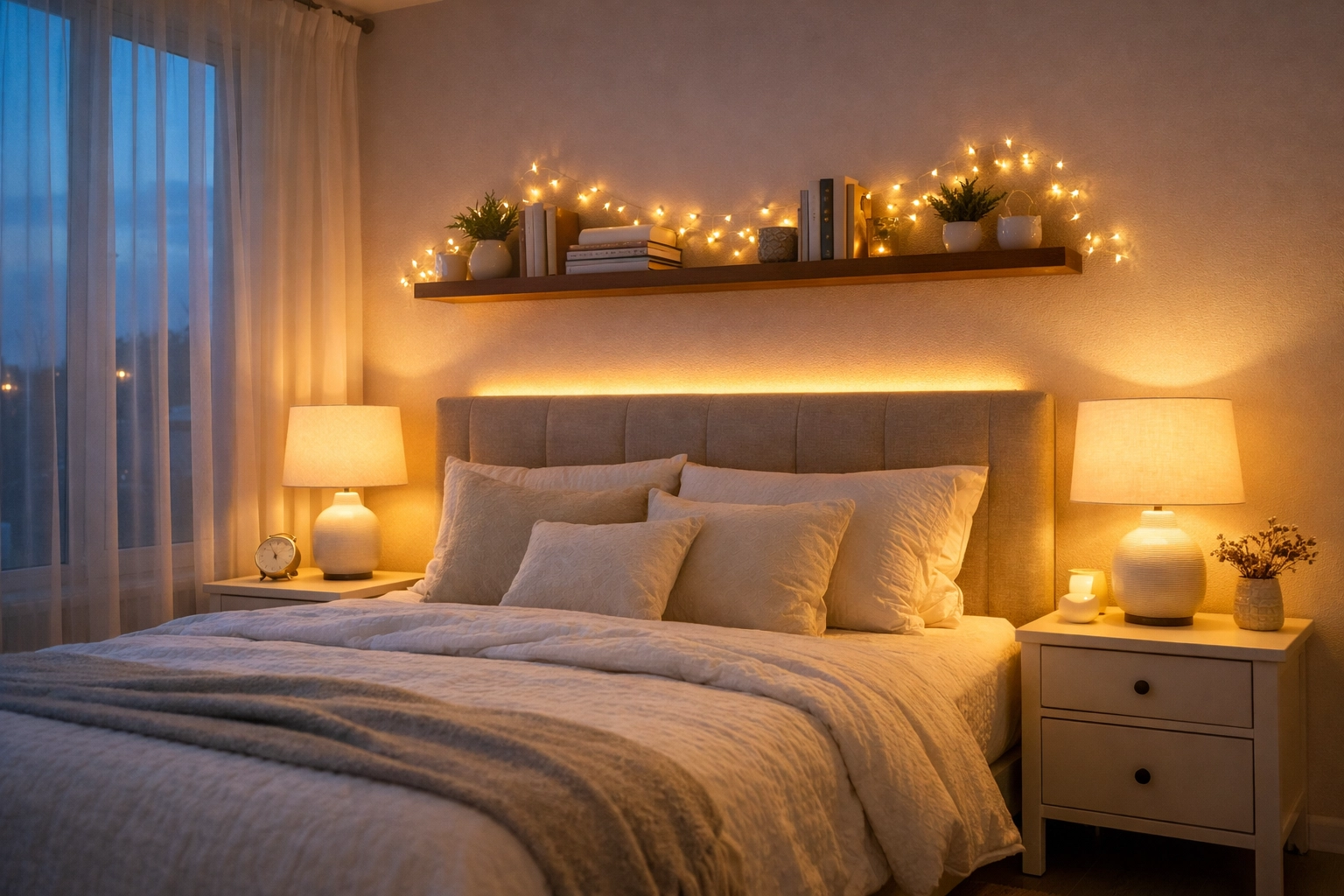
Bedrooms: Bedside lamps are essential, but consider adding a soft LED strip behind your headboard for a hotel-like glow. If you have a vanity or dressing area, add dedicated task lighting there. And here's something I love: using fairy lights or string lights draped over a mirror or woven through a bookshelf. They're affordable, create the coziest ambiance, and require zero installation.
Making It All Work Together
The key to successful layered lighting is creating a transition from day to evening that feels natural rather than jarring. As natural light fades, your smaller lamps and warm LED strips take over gradually. This is why having multiple light sources on different circuits (or smart controls) matters: you can adjust as the day progresses.
Consider the activities that happen in each space and light accordingly. Cooking dinner? You'll want brighter task lighting in the kitchen. Watching telly? Dim everything except maybe a soft accent light behind the TV to reduce eye strain. Reading before bed? That dedicated task lamp next to your chair is perfect, while everything else stays low and cozy.
And remember, you don't need to do everything at once. Start with one or two new light sources and see how they transform the space. Maybe begin with a couple of warm table lamps in your living room. Once you see the difference, you'll be motivated to keep going.
The beauty of this approach is that it's completely renter-friendly and budget-conscious. No holes in walls, no electrician bills, and you can take everything with you when you move. Plus, you can build your lighting scheme gradually as your budget allows: it doesn't have to happen overnight.
Creating a warm, inviting atmosphere through layered lighting is one of the most impactful changes you can make to your home. It affects not just how your space looks, but genuinely how it feels to be there. And the best part? You can start transforming your lighting this weekend with just a few affordable additions and absolutely zero professional help required.
Warmly,
Maria
P.S. For more budget-friendly ideas and cozy home inspiration, come hang out with us on our Charming Homescape Pinterest boards!
Leave a Reply